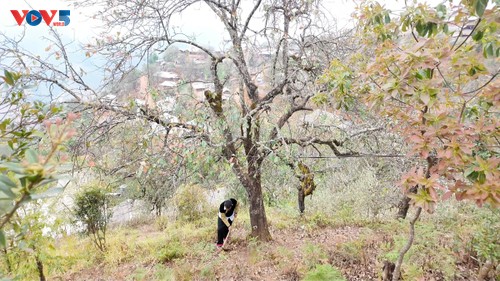
 Thao A Vang of Nam Nghiep hamlet tends his son tra orchard. (Photo: Le Hanh/VOV) Thao A Vang of Nam Nghiep hamlet tends his son tra orchard. (Photo: Le Hanh/VOV)
|
Nam Nghiep hamlet, which spans 1,260 hectares, sits 2,000 to 2,500 meters above sea level, making it the highest inhabited hamlet in Vietnam. From late February to March each year, when the son tra trees bloom, the hillsides are blanketed in delicate white blossoms, luring visitors from far and wide.
To celebrate this natural wonder, Son La launched its first Son Tra Blossom Festival in 2024. The annual event has drawn between 50,000 and 200,000 visitors each year.
“I’m so happy to visit Nam Nghiep during the hawthorn blossom season. The white flowers are stunning, and the locals, dressed in their colorful traditional costumes, create a joyful atmosphere. These festivals should be held more often to help more people discover Ngoc Chien and its breathtaking beauty,” a visitor said.
“The first sight of the blooming son tra trees from the road coming in was amazing. The further we went, the more spectacular it became—the entire village was wrapped in white blossoms,” another visitor has this to say.
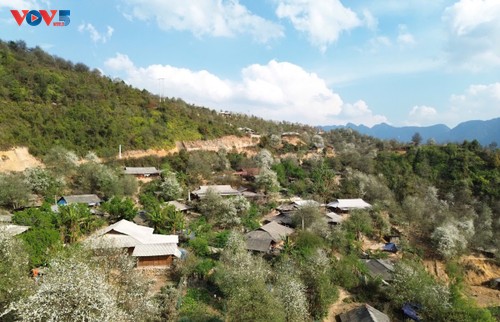 A peaceful village nestles among blooming Son Tra trees. (Photo: Le Hanh/VOV) A peaceful village nestles among blooming Son Tra trees. (Photo: Le Hanh/VOV)
|
According to the local Mong people, the son tra tree has grown here for generations. Some 800 hectares of trees are believed to be between 300 and 500 years old. In recent decades, the villagers have expanded the forest to increase their income through fruit harvesting.
Villager Thao A Vang said, “At first we only sold the fruit. But when tourists from Hanoi came and remarked how beautiful the blooming trees were, I thought, why not turn this into a tourism opportunity?”
What began as a poverty-reducing crop is now fueling a new source of income—community-based tourism. Locals, many of whom once relied on subsistence farming, now offer guided tours, homestays, and other services tied to the blossom season. Visitors come to enjoy the breathtaking scenery, the rich Mong culture, and the unique local cuisine.
“People now understand how valuable the son tra flowers are. They bring in the tourists, and the fruit still provides extra income.”
“More and more visitors are coming. Our village is slowly being transformed by tourism.”
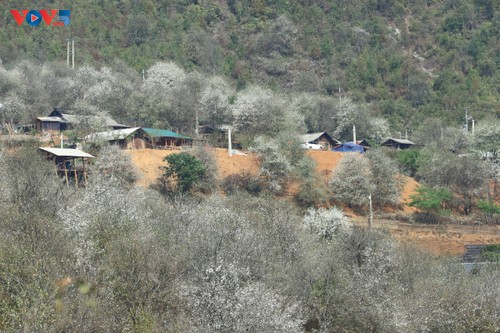 Once just a commercial crop, Son Tra trees have become a lucrative tourism product. (Photo: Le Hanh/VOV) Once just a commercial crop, Son Tra trees have become a lucrative tourism product. (Photo: Le Hanh/VOV)
|
Nam Nghiep’s transformation wouldn’t have been possible without strong support from the local authorities. Commune officials regularly visit the hamlet to provide hands-on guidance—from helping farmers improve blossom quality and tree care to training them in hospitality and tourism services like operating homestays and eateries. Old groves are being revitalized.
According to Ngoc Chien commune’s development plan until 2030, the commune aims to welcome 18,000 tourists and generate 411,000 USD in tourism revenue annually. To that end, Nguyen Minh Tuan, Secretary of Ngoc Chien’s Party Committee, said the commune’s leadership will encourage the locals to preserve their ethnic culture to promote sustainable tourism.
“We’re committed to developing tourism and agriculture—our two key strengths,” said Tuan, adding, “Achieving this goal will require unity, determination, and the participation of the whole political system and people. We believe our commune can make this vision a reality.”
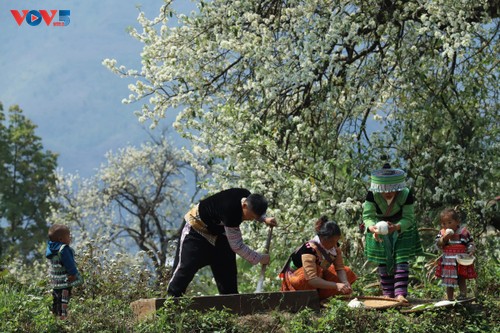 Visitors enjoy Son Tra trees in full bloom while experiencing the rich culture of the local Mong community. (Photo: Le Hanh/VOV) Visitors enjoy Son Tra trees in full bloom while experiencing the rich culture of the local Mong community. (Photo: Le Hanh/VOV)
|
With the support of local leaders, people are taking the initiative to expand son tra cultivation and promote eco-tourism as a long-term livelihood. Echoing that spirit, local resident Khang A Phinh said that they will continue planting son tra trees to prevent erosion and flooding and keep the air fresh and cool. “The trees create a beautiful setting that draws visitors. I hope more people will discover that our village has something special,” according to A Phinh.
What began as a commercial crop has now become a tourism product, branding Ngoc Chien as the “Son Tra Fairyland” on Vietnam’s tourism map. Thanks to a shared vision of the local authorities and community, Ngoc Chien is becoming one of Vietnam’s most unique mountain destinations.