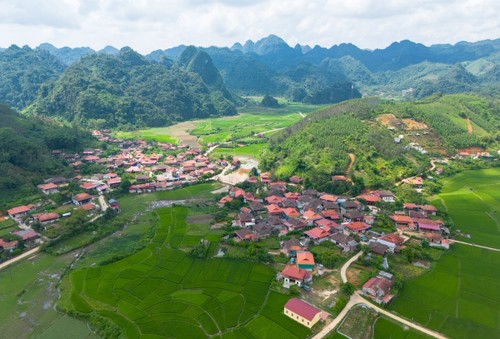
 Huu Lien community-based tourism village is home to Tay, Nung, Dao, and Mong ethnic groups. (Photo: baolangson.vn) Huu Lien community-based tourism village is home to Tay, Nung, Dao, and Mong ethnic groups. (Photo: baolangson.vn) |
The rammed-earth house of the Tày people and rice fields mirroring limestone peaks give Huu Lien a captivating beauty. But what earned this tourism village ASEAN recognition was the vitality of its indigenous culture and the community's effort to preserve its traditional values.
Ngo At Mao, owner of the Mao Homestay, said, "We’re preserving the locality’s distinctive cultural features. We’ve also improved the infrastructure to meet tourists’ needs. The traditional values of our ethnic group have been kept intact, such as the stilt house architecture, customs relating to eating and accommodation, and rice farming."
Huu Lien’s indigenous essence is not staged for tourists. It’s the genuine activity of daily life. Visitors arrive and instantly become part of the experience – then singing around the evening fire, traditional dishes like khau nhuc (braised pork belly seasoned with herbs), smoked meat, and sour bamboo shoots cooked with la giang (sour leaves). Tay women weave indigo cloth, dye yarn with forest leaves, and pass the craft down to their daughters, just as their mothers and grandmothers did.
Visitors are not seeking a "check-in spot" to take some selfies. They want an immersive cultural experience. Many say they feel an affection for this land stimulated by the locals' respect for nature, tradition, and visitors with no hint of over-commercialization.
An American tourist named Larar shared positive feedback about her trip, "We really liked it. We had so much fun on the routes, and also seeing the village and all the friendly people. The kids always say hello and waving. And also the homestay, we really like, the food and the hospitality."
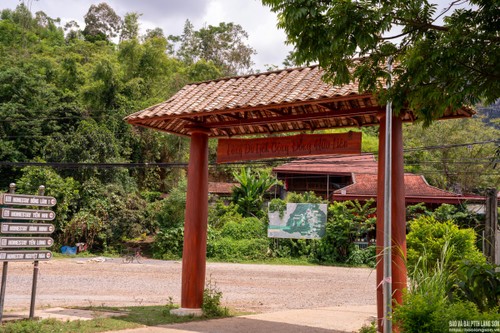 The gate of Huu Lien community-based tourism village (Photo: baolangson.vn) The gate of Huu Lien community-based tourism village (Photo: baolangson.vn) |
Since the administrative merger, Huu Lien commune has expanded its tourism development with experiential tourism routes that include Huu Lien lake, Meo Lat limestone mountain, and Long Dau stream. All development adheres to the "green– sustainable–community-based" criteria of ASEAN standards.
Robin, also from the US, spoke enthusiastically about the outdoor adventure, "It's amazing. We cycled to the crag, and the journey itself was beautiful—the landscape, seeing the villages, and all the fields. The scenery is truly beautiful. Even when climbing on the crags, you could look around and see that everything is just really beautiful."
The ASEAN Tourism Forum praised Huu Lien for its full community engagement. Homestay owners, service workers, and members of the cultural arts troupe are all local residents. They don’t perform – they just continue living their normal lives, ensuring that visitors enjoy an authentic experience.
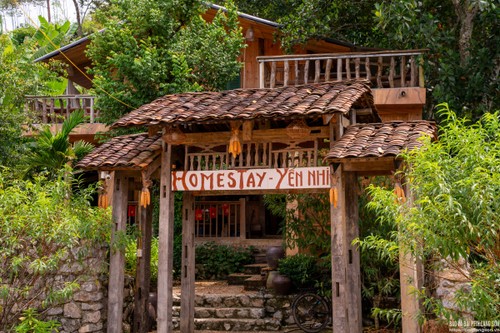 Most homestays are built based on traditional stilt-house architecture, preserving the rustic charm of the countryside while being equipped with modern amenities. (Photo: baolangson.vn) Most homestays are built based on traditional stilt-house architecture, preserving the rustic charm of the countryside while being equipped with modern amenities. (Photo: baolangson.vn) |
Underscoring the importance of preserving these inherent strengths for tourism development, Hoang Minh Tien, Deputy Chairman of the Huu Lien Communal People's Committee, said that in 2025, Huu Lien was presented with the ASEAN Community Tourism Village Award.
“We have established six cultural performance groups to engage in the preservation of intangible cultural values. We’re also promoting the culture of the Dao ethnic community. We guide homestay owners to coordinate with these cultural groups to keep heritage and tradition alive," said Tien.
Huu Lien commune doesn’t chase modern tourism trends, instead opting to follow its own traditional path. The local tourism community is committed to preserving their culture so that every visitor experiences an authentic indigenous space there.