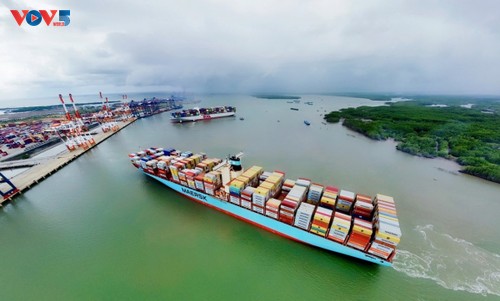
 The eastern region, once Ba Ria-Vung Tau province, is pressing ahead with its green and circular economy goals. (Photo: Luu Son/VOV correspondent in HCMC) The eastern region, once Ba Ria-Vung Tau province, is pressing ahead with its green and circular economy goals. (Photo: Luu Son/VOV correspondent in HCMC) |
Under the master plan for 2021–2030, with a vision to 2050, the eastern area (formerly Ba Ria–Vung Tau province) has set strict requirements: all projects must align with green economy principles, low-carbon operations, and circular business models. These guidelines are shaping local economic activities and driving the green transition across industries, particularly renewable energy.
One highlight is the Con Dao special zone, where the local administration is implementing a circular economy project. The island is prioritizing solar and other renewables to cut environmental impacts and move toward becoming a clean energy hub. It is also phasing out gasoline and diesel vehicles in favor of electric public transport, reducing single-use plastics in tourism and services, and working toward being a plastic-free area.
Le Anh Tu, Secretary of the Con Dao Party Committee, said the island’s sustainable development direction will make it a symbol of conservation and innovation.
Con Dao is increasing forest, marine ecosystem, and biodiversity protection while setting guidelines to ensure that tourism doesn’t harm the environment, he added.
“Con Dao has become a symbol of development balanced between conservation and innovation. With a sustainable vision, it is attaching special importance to protecting resources, nature, and the environment. A circular economy project is being implemented to limit waste, reduce pollution, and safeguard biodiversity and natural landscapes.”
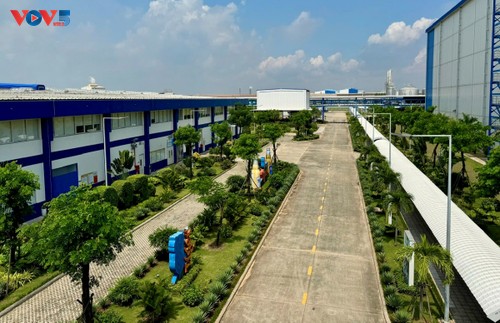 Many enterprises in HCMC’s industrial parks have taken the initiative in advancing green transformation toward net-zero emissions. (Photo: Luu Son/VOV correspondent in HCMC) Many enterprises in HCMC’s industrial parks have taken the initiative in advancing green transformation toward net-zero emissions. (Photo: Luu Son/VOV correspondent in HCMC) |
The eastern region has 13 industrial parks, several already embracing green solutions. Phu My 2 and Phu My 3 IPs, for example, are receiving technical and financial support from Japan’s International Cooperation Agency (JICA) to accelerate their green transition.
By 2030, the region is expected to have 24 IPs, including 7 new IPs designed with a focus on services and clean, eco-friendly production.
Vo Thanh Phong, Deputy Head of Ho Chi Minh City’s Management Board of Industrial and Export Processing Zones, said IPs are moving toward net zero. “We’ll support businesses in their green transition, turning industrial parks into eco-parks where enterprises follow circular economy models and work symbiotically. This contributes directly to the Government’s target of net-zero carbon emissions by 2050.”
The eastern region also enjoys favorable conditions for greening its economy. Associate Professor Dr. Phung Chi Sy, Deputy Chairman of the Vietnam Association for Conservation of Nature and Environment, says that virtually all sectors in the former Ba Ria–Vung Tau area can apply circular models. Heavy industries such as cement, steel, and chemicals, he said, have enormous potential to achieve net-zero emissions by 2050.
“Businesses can adopt solutions such as energy efficiency and cleaner production. That means addressing the issue of input materials, conserving electricity, water, and raw materials, and upgrading technology,” said Sy.
With its eastern region leading the way, Ho Chi Minh City is entering a new era of green transformation. The city’s commitment to sustainable development and global integration is reinforcing Vietnam’s pledge to achieve net-zero emissions by 2050 made at the 26th UN Climate Change Conference in the UK.