 (Photo: vneconomy.vn) (Photo: vneconomy.vn) |
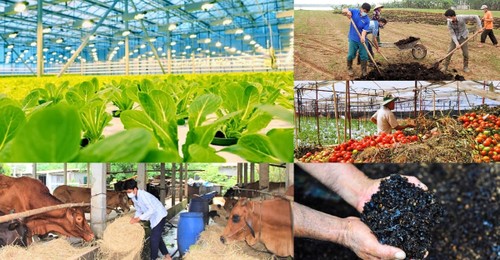
The circular agriculture model follows a closed-loop system that maximizes resource efficiency and recycles by-products. This approach reduces costs, boosts productivity, improves product quality, and protects the environment, laying the foundation for a green growth economy.
“The circular agriculture economy allows diversification of products and generates economic and environmental benefits by conserving resources and reducing greenhouse gas emissions. It is one of the key solutions for sustainable agricultural development,” Associate Professor Dr. Dao The Anh, former Deputy Director of the Vietnam Academy of Agricultural Sciences, said.
Vietnam holds strong advantages in advancing circular farming thanks to its abundant agricultural by-products.
Le Duc Thinh, Director of the Department of Economic Cooperation and Rural Development of the Ministry of Agriculture and Environment, told VOV that Vietnam has an abundance of agricultural by-products, especially rice straw, coffee husks, bagasse, rice husks, and livestock waste — all valuable inputs for circular farming.
“The national ‘One Commune, One Product (OCOP)’ program encourages farmers to fully tap local resources to create farm produce under circular models. Livestock waste, for example, becomes input for crop production, while crop residues return as feed for livestock, creating a cycle that even extends into rural tourism,” said Thinh.
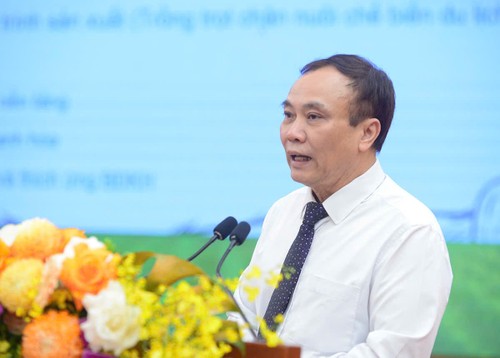 Le Duc Thinh, Director of the Department of Economic Cooperation and Rural Development (Photo: vneconomy.vn) Le Duc Thinh, Director of the Department of Economic Cooperation and Rural Development (Photo: vneconomy.vn) |
To speed up the transition, Vietnam is rolling out comprehensive measures — from policy frameworks and new technologies to supply chain linkages and mindset change.
Key steps include completing support policies, incentivizing recycling technologies, applying biotechnology and digital solutions to optimize production and waste treatment, building sustainable supply chains connecting businesses and farmers, and strengthening international cooperation to learn from advanced economies.
The Ministry of Agriculture and Environment has issued a strategic roadmap for science and technology in circular agriculture through 2030. By then, 50% of crop by-products are expected to be treated and recycled, with 60% of households and all farms applying livestock waste treatment technologies.
According to Nguyen Tri Ngoc, Vice President and Secretary General of the Vietnam General Association of Agriculture and Rural Development, the circular economy is inevitable. Science, technology, and innovation play a decisive role in agricultural circular economy.
“So we need to establish technical standards and complete a set of criteria to measure efficiency,” Ngoc said.
Circular agriculture models have already lowered input costs while raising output value with safe and eco-friendly products.
Labor Hero Tran Manh Bao, Chairman of the Vietnam Seed Trade Association and Thai Binh Seed Group, said they are developing high-value products such as nutritional rice, organic rice, rice-based cakes, and rice milk rather than simply exporting raw rice. “We’ve selected climate-resilient, high-yield varieties that require minimal fertilizers and pesticides, suitable for organic production and environmental protection. Rice husks are recycled into fertilizer, while infrastructure and production zones are designed to minimize resource use — forming a closed-loop model from production to processing to consumption.”
Circular agriculture increases farmers’ incomes, preserves ecosystems, and helps Vietnam build a more competitive agricultural sector. By pushing forward with circular farming and expanding global cooperation, Vietnam aims to create lasting value for its farm products.