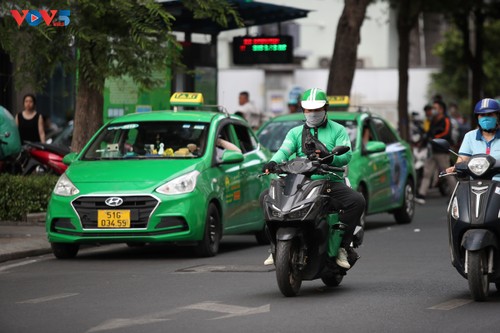
 (Photo: Ty Huynh/VOV) (Photo: Ty Huynh/VOV) |
Experts say these policies will help Vietnam achieve net-zero emissions by 2050. Around 400,000 shippers and app-based drivers using gas-powered motorbikes will switch to electric vehicles in four phases, starting January 1, 2026. And they will be given some incentives.
Le Thanh Hai, Director of the Center for Economic Application Consulting at the Institute, said: "We propose that the government exempt electric bikes from VAT for two years and waive registration fees for the same period. This would create a strong incentive for drivers to switch."
Under the Ho Chi Minh City’s plan, all buses will be electric by 2027. The municipal authorities will also begin regulating emissions from the city’s 9 million personal motorbikes, most of which are gas-powered vehicles.
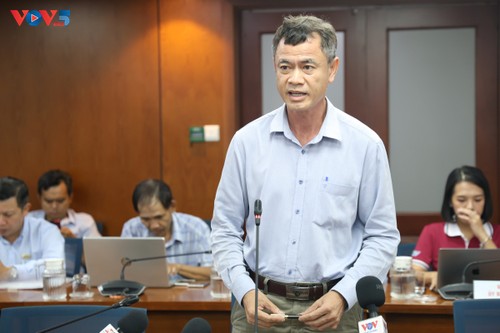 Mr. Le Thanh Hai, Director of the Center for Economic Application Consulting, Ho Chi Minh City Institute for Development Studies. (Photo: Ty Huynh/VOV) Mr. Le Thanh Hai, Director of the Center for Economic Application Consulting, Ho Chi Minh City Institute for Development Studies. (Photo: Ty Huynh/VOV) |
Bui Hoa An, Deputy Director of the Ho Chi Minh City Department of Construction, said: "We will need agencies for registering and inspecting emissions. Currently, we're waiting for technical standards from central ministries. We’re also preparing facilities and training staff to meet those standards."
Dr. Duong Nhu Hung, Head of the Industrial Management Faculty at Ho Chi Minh City University of Technology, said: "The metro system and charging stations must be integrated. If we want to encourage electric vehicle use, we need to develop charging infrastructure connected to power grids and measurement-monitoring technologies."
Ho Chi Minh City is finalizing traffic emissions control measures to 2030 with a vision to 2050, establishing low-emission zones, prioritizing electric vehicles, and restricting gasoline-powered vehicles in areas such as the city’s downtown, Can Gio, and Con Dao.