 (Photo: VOV) (Photo: VOV) |
The rollout of the two-tier local government model in 34 provinces and cities was a major step in institutional reform and apparatus streamlining. The implementation has been comprehensive, from refining institutions and policies to providing detailed guidance to local authorities.
Stable, orderly operation
The guiding principle of the two-tier model is to create a lean and mean structure, reduce overlap, enhance administrative efficiency, and narrow the gap between government and citizens. It is Vietnam’s most extensive and profound local apparatus reform in decades.
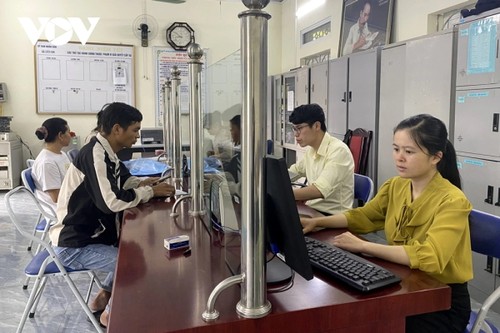
Since its launch on July 1, 2025, the two-tier local government model has operated smoothly overall, contributing to faster administrative processing for citizens and businesses while maintaining defense and security at the grassroots level. The rate of on-time case resolutions has increased, waiting times have decreased, and administrative procedures have become more transparent and interconnected. In some localities, administrative processing has been reorganized by related functions rather than by various departments and divisions, leading to greater efficiency.
There has been a visible shift in the public service mindset, from letting citizens to do on their own to serving citizens.
At the 10th session of the 15th National Assembly, Deputy Prime Minister Pham Thi Thanh Tra said the new model aims to transform administrative management into constructive governance that serves the people, replaces passive administration with proactive administration, and serves the goals of national development and people’s happiness.
Ms. Tra said: "This transformation is not just a technical adjustment in organizational structure but a fundamental, comprehensive, systemic reform that profoundly affects the philosophy of power organization, institutional design, governance methods, administrative thinking, human resource management, and development goals. The reform responds to urgent practical needs, aligns with global trends, and serves Vietnam’s long-term development goals in the new era."
Setting direction for next phase
While Vietnam has achieved encouraging initial results, the two-tier local government model remains new and demands a complete shift in mindset and governance methods. Challenges and bottlenecks are inevitable, particularly in human resources, digital interconnectivity, and the clear description of responsibilities. According to Deputy Prime Minister Tra, the Government will focus on six key groups of solutions to ensure the model delivers tangible results.
Ms. Tra added: “The first priority is to improve the institutional and policy framework. The National Assembly passed 34 laws in its previous session and is expected to adopt 49 more in this session, which are critical legal documents that directly impact administrative operations. Alongside legislative work, the Government will continue refining key aspects of organizational structure, staffing, and classification standards for administrative units, with the goal of completing the institutional framework by the end of 2025.”
The Government will build a qualified and capable civil service workforce, especially at the commune level. Data from 34 provinces and cities show that the average number of commune-level officials and public employees is about 41, with only 5.38% not meeting professional requirements. However, as the model is new, some personnel still face challenges adapting to new operational demands.
To address this, the Ministry of Home Affairs has been directed to urgently finalize job position frameworks, particularly for commune-level authorities, and to establish the necessary conditions for formal staffing allocation for the 2026–2030 period.
Competent agencies will also review and adjust local development plans, strengthen resources, and design financial mechanisms suited to the two-tier governance model. Efforts will be intensified to promote digital transformation and AI application in public service, build e-government and digital government systems, and expand nationwide initiatives on “digital literacy for all.”
For four months, the two-tier local government model has been gradually becoming a more compact, flexible, and citizen-oriented system. As General Secretary To Lam said at the 14th Plenum of the 13th Party Central Committee on Wednesday, this model and the new development space it creates will serve as an institutional lever, turning resources into momentum, potential into sustainable growth, and contributing to the realization of Vietnam’s centennial goals in an ever-changing regional and global order.