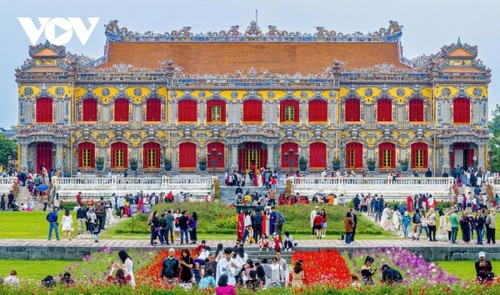
 Kien Trung Palace in the Hue Imperial Citadel Kien Trung Palace in the Hue Imperial Citadel |
Hue serves as a hub for culture, education, healthcare, and tourism in the central region. It’s also a key transportation node and a gateway to the sea along the East-West Economic Corridor. The city’s master plan needs to open up development space, unlock potential, and generate momentum for Vietnam’s north central region.
Under its planning orientation toward 2030, with a vision to 2050, Hue will develop according to a “river – lagoon – sea” model. The Huong (Perfume) River will provide a central geographic and cultural axis, the Tam Giang-Cau Hai lagoon will provide a distinct ecological tourism space, and the coast will become a modern urban seafront focused on the marine economy.
This approach aims to reinforce Hue’s unique identity and improve its competitiveness and resilience to climate change.
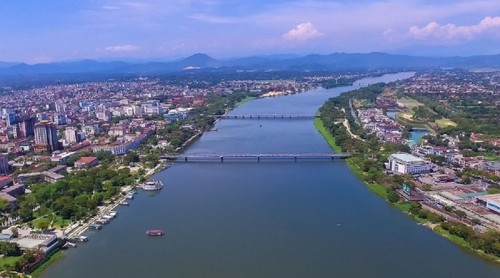 The Huong (Perfume) River serves as an important axis in Hue’s urban development plan. The Huong (Perfume) River serves as an important axis in Hue’s urban development plan. |
Architect Ngo Viet Nam Son underscored the importance of planning to go hand-in-hand with implementation and must include strategies to attract investors and improve competitiveness.
“Investment is crucial for Hue’s key infrastructure development, especially multi-modal transportation. Connecting with Da Nang via the national infrastructure system will help Hue's economy grow,” said Son.
The planning is built on five pillars: culture and heritage; a knowledge-based economy with high-quality services and a sea-lagoon economy; ecological urban planning adapted to climate change; smart infrastructure and inter-regional connectivity; and placing the people of Hue, particularly its riverine communities, at the center of development.
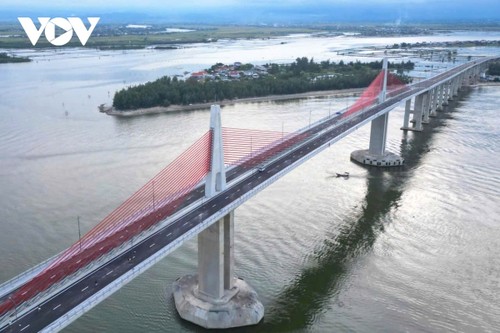 Thuan An bridge will create opportunities for local socio-economic, tourism and service development. Thuan An bridge will create opportunities for local socio-economic, tourism and service development. |
Architect Tran Ngoc Chinh, Chairman of the Vietnam Urban Planning and Development Association, said Hue must be defined as a cultural heritage city closely linked with Da Nang, Quang Tri, economic zones, and maritime spaces.
He highlighted the importance of strengthening regional and heritage linkages, including cooperation with Laos, while preserving the Hue Imperial Citadel.
“Hue planning must clarify that the Hue Imperial Citadel and the entire inner city are priority spaces for conservation. Promoting heritage values and protecting the Huong River landscape and heritage are prerequisites,” said Chinh.
The current bottlenecks hampering Hue’s development include infrastructure, energy supply, human resources, urban governance capacity, budget constraints, and development space conflicts. There are proposed solutions to improve feasibility and ensure alignment between the city’s master plan and national, regional, and sectoral planning frameworks.
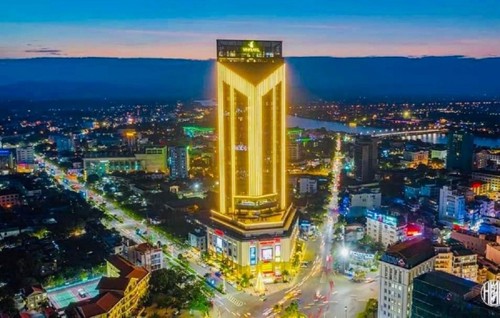 The center of Hue city (Photo: VOV) The center of Hue city (Photo: VOV) |
According to Nguyen Khac Toan, Chairman of the municipal People’s Committee, adjusting the planning reflects the will and aspirations of the local Party Committee, government, and citizens. “We are focusing on creating a detailed plan for deploying and implementing the planning to make it a reality.”
Hue’s new urban landscape must preserve the former capital’s tranquility while affirming its role as a centrally run city within Vietnam’s development trajectory.