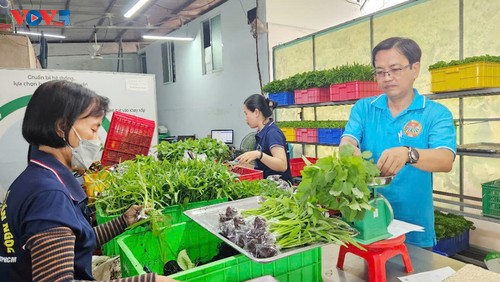
 Tuan Ngoc Cooperative continues to expand cultivation areas to multiple regions in Dong Nai and Ninh Thuan province. (Photo: Nguyen Quang) Tuan Ngoc Cooperative continues to expand cultivation areas to multiple regions in Dong Nai and Ninh Thuan province. (Photo: Nguyen Quang) |
Lam Ngoc Tuan and four partners, through their steadfast commitment to clean farming, have transformed Tuan Ngoc Cooperative from a small hydroponic vegetable project into a model of urban agricultural innovation.
When the market responded positively, Tuan took out loans to expand to one ha. Targeting the premium segment—restaurants, hotels, and upscale apartments—the cooperative’s products have earned 3-star ratings.
OCOP products are rated from 1 to 5 stars. A 3-star rating scores denotes a product that with stable management and trade can be upgraded to 4 stars. Several of the cooperative’s items also carry the Vietnam High-Quality Goods certification and the city’s Green Tick of Responsibility label, Tuan said.
“When we operate the model in apartment complexes, it’s not just our produce but other goods from inside and outside the city. We’ve partnered with major distributors like Saigon Co.op to offer residents a wider range of essentials to make the weekly shopping more convenient,” he added.
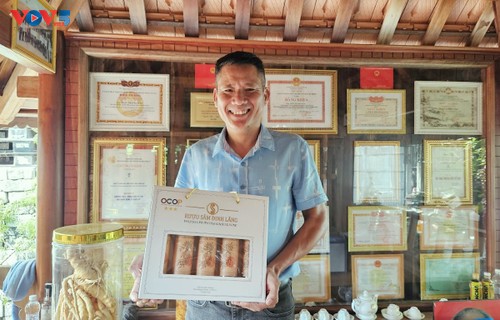 Tran Thanh Oanh, director of ABZ Company in Hung Long commune in HCM city (Photo: Nguyen Quang) Tran Thanh Oanh, director of ABZ Company in Hung Long commune in HCM city (Photo: Nguyen Quang) |
Tran Thanh Oanh, director of the ABZ Company, has taken an innovative approach with his OCOP-certified dinh lang (Polyscias fruticosa) herbal beverage. Instead of following traditional distribution channels, ABZ placed its product in retail systems at Tan Son Nhat, Noi Bai, Da Nang, Cam Ranh, and Phu Quoc airport. To achieve this, Oanh leveraged support from the OCOP program in training, communications, and trade networking.
“I hope the Ho Chi Minh City Farmers’ Association or another agency can strengthen links among OCOP producers. We don’t necessarily need formal clubs—just a focal point for sharing experiences, ensuring consistent quality and volume, and forming OCOP product combos for domestic and export markets,” said Oanh.
Since its launch in 2019, Ho Chi Minh City has certified nearly 420 OCOP products rated from 3 to 5 stars. By mid-2025, following its merger with Binh Duong and Ba Ria–Vung Tau, that figure surpassed 920 certified products.
After five years, the city’s OCOP portfolio has expanded beyond food and handicrafts to include medicinal herbs, beverages, deep-processed goods, and community-based tourism. Many small and medium-sized enterprises are adopting digital technology for production, traceability, sales, and customer care.
OCOP products have created jobs, increased incomes, and strengthened links between rural producers and urban markets.
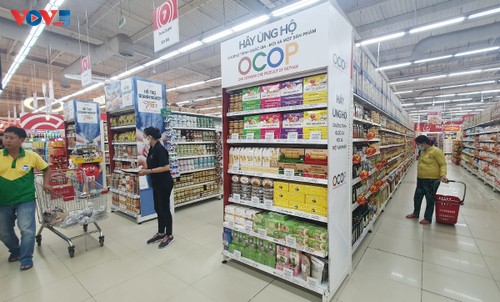 HCMC is home to lots of innovative OCOP models. (Photo: Nguyen Quang) HCMC is home to lots of innovative OCOP models. (Photo: Nguyen Quang) |
Tran Phu Lu, director of the municipal Investment and Trade Promotion Center (ITPC), stressed the importance of multi-channel marketing—especially via digital platforms and international events. Displaying OCOP goods at ITPC’s showroom is part of a broader strategy to promote key products and expand distribution networks, even for items from other provinces.
But Lu said OCOP must go beyond branding. To compete effectively, producers need to improve quality and comply with standards like VietGAP (Vietnamese Good Agricultural Practices) and GlobalGAP (Global Good Agricultural Practices). He also encourages OCOP businesses to integrate community and experiential tourism to increase engagement, brand visibility, and immersive product experiences.
“Vietnamese products are steadily improving in quality, tailored to consumer trends,” said Lu, adding, “What remains is to strengthen promotion and connect with distribution networks—especially those of multinational corporations. This aligns with the modern trend of ‘in-place exports’ through major global retailers. If leveraged efficiently, it’s an opportunity to bring Vietnamese goods to international markets.”
Over the past five years, Ho Chi Minh City has nurtured innovative OCOP models and provided solid backing through funding, market access, and brand promotion. This foundation is enabling OCOP producers to grow sustainably—helping elevate the value of Vietnamese brands.