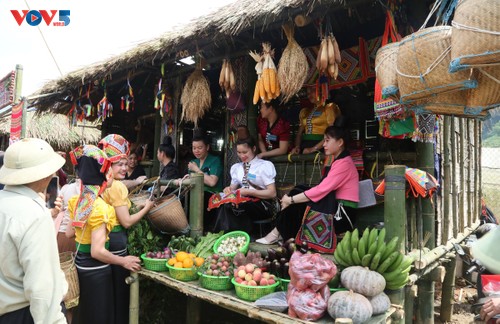
 Son La’s agricultural products are diverse in types and designs (Photo: Le Hanh/ VOV in the northwestern region) Son La’s agricultural products are diverse in types and designs (Photo: Le Hanh/ VOV in the northwestern region) |
Son La has developed 200 agricultural products with strong potential in six categories: food, beverages, herbal medicine, souvenirs, rural services, and tourism. Many of these have earned OCOP recognition.
Carrying strong regional identity and reflecting the culture of the northwest’s ethnic communities, these products also have high commercial value. Outstanding examples include pure coffee powder, cascara tea, cloud tea, premium Shan tea, Van Ho black tea, Ngoc Chien sticky rice, Moc Chau fresh vermicelli, Lingzi mushrooms, and Ngoc Linh ginseng extract.
The OCOP program has fueled rural economic growth by raising incomes and improving living standards, particularly in remote areas. Numerous cooperatives, enterprises, and farming households have shifted from small-scale production to linked value chains, professionalizing processes from cultivation and processing to packaging and marketing. A market-oriented mindset that prioritizes quality is increasingly widespread among farmers, laying a solid foundation for the sustainability of Son La’s OCOP ecosystem.
Mai Duc Thinh, Director of the May 19 Agricultural Development Cooperative, said, “Cooperatives and farmers are now working hand in hand to deliver safe, high-quality products. This collaboration strengthens both the reputation and brand of agricultural goods and processed products of our cooperatives.”
 Son La is one of leading localities in Vietnam to develop OCOP products. (Photo: Vinh Phong/VOV5) Son La is one of leading localities in Vietnam to develop OCOP products. (Photo: Vinh Phong/VOV5) |
Beyond increasing product numbers, OCOP has fundamentally improved quality and production practices. Many certified products have seen revenues double or even triple, creating stable livelihoods for thousands of rural workers. The program has become a cornerstone of new rural development, lifting living standards and reinforcing local confidence in economic growth.
Behind these achievements is Son La’s strong focus on training and capacity-building. The province regularly organizes programs on management skills, production processes, branding, packaging design, and traceability. It also supports producers with machinery and facility upgrades, food safety compliance, and quality certification.
Nguyen Van Tuan, Director of Bao Gia 26 Company, told VOV, “After joining the program, I received professional advice on production methods and packaging design, which has helped my products reach more customers.”
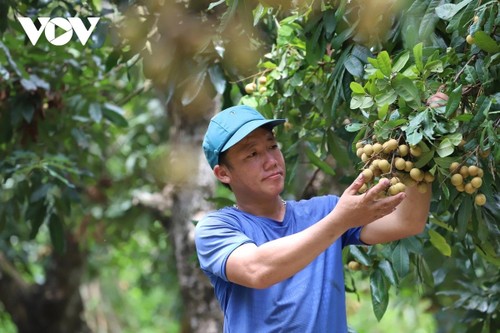 The second and third quarters are the main harvest of Son La’s key fruits. (Photo: Thu Thuy/VOV in the northwestern region) The second and third quarters are the main harvest of Son La’s key fruits. (Photo: Thu Thuy/VOV in the northwestern region) |
Trade promotion has also been strengthened. Son La has established a network of OCOP product stores across the locality and participated in fairs and exhibitions in major markets like Hanoi, Da Nang, and Ho Chi Minh City. Embracing digital transformation, Son La has brought its products to e-commerce platforms like Postmart, Voso, and Sendo, cutting intermediary costs and connecting farmers directly with consumers.
According to Cam Thi Huyen Trang, Secretary of the provincial Youth Union, “Applying digital transformation to communication and promotion has been highly effective. Through training sessions and forums, we want to raise awareness among farmers about using digital platforms to promote and market local agricultural products.”
For long-term sustainability, Son La is prioritizing the development of standardized raw material zones to guarantee stable output and quality that meet export requirements.
Authorities are tightening control over seedlings, fertilizers, and production techniques, while encouraging certifications such as VietGAP and organic standards. It is strengthening models linking businesses, farmers, and distributors to establish closed value chains, increase efficiency and product value, and secure markets.
Identified as a central mission in Son La’s rural development strategy over the past five years, OCOP is set to turn out more high-quality products that meet international standards and integrate with tourism development. OCOP has become a way for Son La’s mountain communities to build prosperity with confidence on their own land.