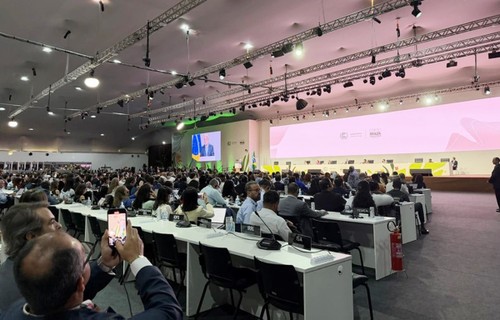
 The opening ceremony of COP30 in Brazil (Photo: Chu Huong/ kinhtemoitruong.vn) The opening ceremony of COP30 in Brazil (Photo: Chu Huong/ kinhtemoitruong.vn) |
COP30 is gathering some 50,000 delegates from 194 countries and organizations in Brazil from November 10 to 21, right after the Belem Climate Summit on November 6–7.
New emission reduction roadmap
Unlike the Belem Climate Summit which highlighted political and diplomatic messages from world leaders, COP30 will dive straight into concrete actions countries need to take in the fight against climate change.
Prior to COP30, the agenda focused on accelerating the reduction of greenhouse gas emissions, increasing climate finance for developing countries, and establishing a concrete roadmap to phase out fossil fuels. The question this year is which topic will take priority in negotiations.
At COP28 in Dubai and COP29 in Baku, climate finance and fossil fuel phase-out dominated discussions. At COP30, emission reduction will return to the top of the agenda as the world reviews progress achieved in the 10 years since the 2015 Paris Climate Agreement. This year marks the deadline for countries to submit their new Nationally Determined Contributions (NDCs), specifying their climate action commitments.
At the opening plenary, UNFCCC Executive Secretary Simon Stiell warned that current commitments are too slow to curb global emissions. 113 countries have submitted new NDCs covering 69% of global emissions, but the estimated 12% reduction by 2035 will be insufficient to keep global warming below the 1.5°C above pre-industrial levels set in the 2015 Paris Agreement.
The Alliance of Small Island States (AOSIS) has demanded bigger emission cuts. Ilana Seid, AOSIS spokesperson and Palau’s Ambassador to the UN, said the world needs a clearer global roadmap specifying how much more emissions each country will cut. After many unfulfilled promises, AOSIS members, who emit the least, are among those suffering the most from climate change.
Johan Rockström, Director of Germany’s Potsdam Institute for Climate Impact Research, said the current pace of emission cuts is far too slow, with some of the largest emitters even backsliding, while the impacts of climate change are occurring faster and more severely than previous scientific predictions.
“Since 2015, when we signed the Paris Agreement, when science was clear, even the world of policy was clear that we needed to bend the global curve of emissions no later than 2020, to cut emissions by half by 2030, and to be on this very decisive and clear pathway towards a net zero global economy by 2050. And now we're five years into this decisive decade, and emissions continue rising,” Rockström said.
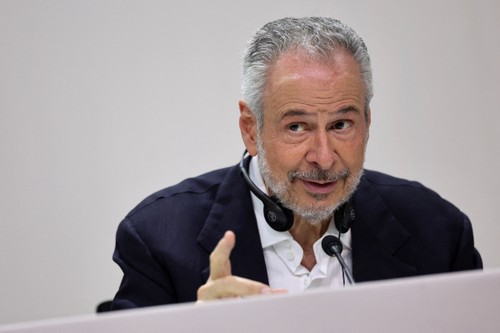 COP30 President André Corrêa do Lago (Photo: Adriano Machado/ REUTERS) COP30 President André Corrêa do Lago (Photo: Adriano Machado/ REUTERS) |
Commitments from developed countries
A positive sign for the two-week COP30 negotiations is that the conference agenda was approved smoothly before the plenary opening. COP30 President André Corrêa do Lago, former Brazilian Ambassador to India and Japan, said early consensus on the agenda is an important political test that shapes the level of cooperation on key topics and allows parties to work efficiently from the outset. However, he cautioned that some developed countries seem to be less interested in climate efforts, referring to the US, who will be largely absent from this year’s summit.
Sharing this concern, Brazilian President Luiz Inácio Lula da Silva criticized the world’s major powers for raising military spending to a total of 2.4 trillion USD this year, while delaying their climate obligations. Still, Brazilian officials reaffirmed multilateralism as the only way to tackle the climate crisis, and said it’s time for the Global South and China to play a bigger role in climate action.
COP30 President André Corrêa do Lago said: “I think that the absence of the US, some reluctance and complexity in the way that some other developed countries are dealing with climate, have opened some space for the world to see what developing countries are doing.”
Observers say developing countries are gaining a more prominent voice in COP negotiations, but universal cooperation remains crucial, because the role of developed nations in climate finance and technology is indispensable. In the short term, the lack of strong commitments from developed countries may hinder one of COP30’s core goals: tripling global climate finance from the current 300 billion USD a year to 1.3 trillion USD by 2035.
The creation of new governance mechanisms, such as Brazil’s proposal to establish a UN Climate Council with the authority to monitor and penalize countries that fail to honor their commitments, will also be difficult to achieve without the developed nations’ support. The two weeks of negotiations in Belem will not be easy, though the agenda has already started smoothly.