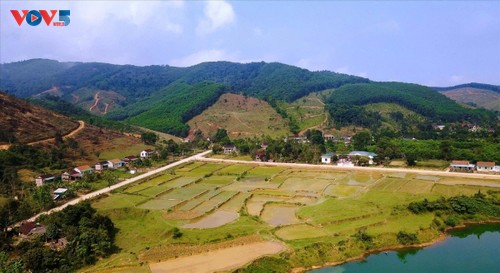
 Rao Tre hamlet of the Chut ethnic group in Ha Tinh province (Photo: Kim Lieu/VOV) Rao Tre hamlet of the Chut ethnic group in Ha Tinh province (Photo: Kim Lieu/VOV) |
The festival is usually held at the forest edge near the village with simple offerings and solemn rituals. Ho Thi Kien, head of Rao Tre hamlet in Ha Tinh province, said villagers are committed to preserving their identity and cultural values. “The local authorities also help us organize a warm and happy festival.”
The "Lap Lo Festival" has two parts. The ceremonial part features the erection of the "neu" bamboo tree and four side poles, presentation of offerings, and worship.
The second festive part includes folk singing and dancing, traditional games, and football matches.
The "neu" tree in the center is seen as a spiritual channel, marking the ritual site and sending an invitation to deities to attend the festival. The four side poles symbolize the four compass directions: East, West, South, and North. The spirits are believed to dwell on the five poles to enjoy the offerings.
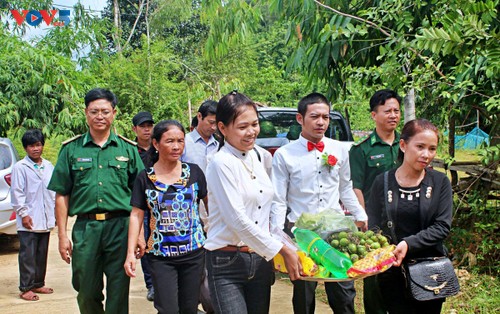 People bring offerings to the Lap Lo Festival. (Photo: Kim Lieu) People bring offerings to the Lap Lo Festival. (Photo: Kim Lieu) |
After setting up the ceremonial poles, the villagers together prepare the offerings and bring ceremonial items to the ritual site to invite the gods of the rivers, mountains, forests, and ancestral souls to join the ceremony.
The village elder begins the ritual by performing divination using two bamboo sticks placed on a knife. He prays for the spirits’ blessings to ward off misfortune and bring good luck and prosperity to the hamlet. Then he takes a handful of rice from a bowl on the offering tray and tosses it in four directions to welcome the spirits, gods, and ancestors.
As music plays, the festive part begins. All villagers, young and old, sing and dance to the sound of the "Chu rabon" bamboo-tube instrument and "Pi" flute, which are indispensable musical instruments of joyful events. They also join folk games such as tug of war, stick pushing, and football.
"The Lap Lo Festival is very joyful. The authorities give us gifts on this occasion. Everyone is truly excited," villager Ho Thi Tao said.
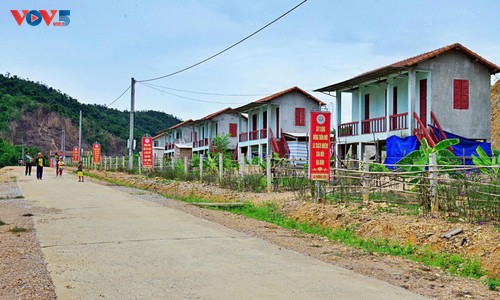 Rao Tre village is decorated in celebration of the Lap Lo Festival. (Photo: Kim Lieu) Rao Tre village is decorated in celebration of the Lap Lo Festival. (Photo: Kim Lieu) |
"We are deeply committed to preserving and promoting the traditional values of ethnic communities, with a focus on reviving the Lap Lo Festival for the Chut. During the festival, the villagers perform worship rituals honoring the gods of the river and mountains and showcase their cultural and artistic performances," Tran Quoc Bao, Chairman of the People’s Committee of Huong Khe commune, Ha Tinh province, said.
The local authorities and villagers are working together to turn the "Lap Lo Festival" into a distinctive cultural tourism product, according to Tran Xuan Luong, Deputy Director of the Department of Culture, Sports, and Tourism of Ha Tinh province.
"We have researched and revived the Lap Lo Festival, and developed a detailed guide for local authorities and villagers to organize the annual event in a professional and well-structured way," said Luong.
The Chut ethnic group in Rao Tre has 46 households with 157 people living at the foot of Ka Day mountain. The "Lap Lo Festival" is an occasion for locals to promote their cultural values, strengthen solidarity, and share joy with others.