 (Photo: VGP) (Photo: VGP) |
After 5 to 7 years of rollout, many provinces and cities have moved from pilot models to fully operational smart city projects, complete with Intelligent Operations Centers (IOCs).
As of mid-August, the Ministry of Construction reported that 45 out of 63 provinces and cities (before the recent administrative merger) now run IOCs, most commonly for traffic monitoring via CCTV systems.
At the heart of this transformation is a consistent principle: putting people at the center. In Hue, for example, the Hue-S platform allows residents to report issues directly to authorities, who respond and take corrective action. Services have expanded from public security to environmental management, healthcare, and education — effectively turning smartphones into “microphones” for citizens.
In Da Nang, the “Danang Smart City app” functions as a “pocket dashboard” for residents. With a few taps, they can submit feedback, check bus routes, access open data, and explore a wide range of digital services. Designed with an intuitive interface, the app ensures accessibility for all users.
Similarly, the “iHaNoi” app enabling citizens to send feedback on almost every aspect of public life to authorities is proving highly effective. Nationwide, the VNeID digital identity platform has become a “master key” for cutting red tape in public administration.
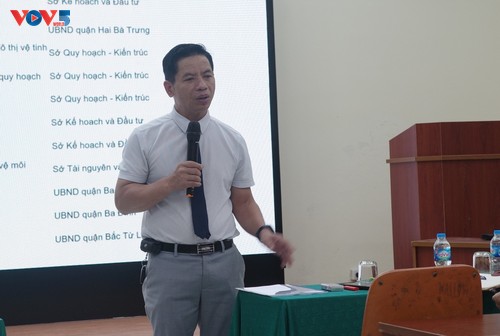 Associate Professor Dr. Nguyen Huu Phuong, Deputy Director of the Academy for Training and Capacity Building of the Ministry of Construction (Courtesy photo of Associate Professor Phuong) Associate Professor Dr. Nguyen Huu Phuong, Deputy Director of the Academy for Training and Capacity Building of the Ministry of Construction (Courtesy photo of Associate Professor Phuong) |
Associate Professor Dr. Nguyen Huu Phuong, Deputy Director of the Academy for Training and Capacity Building of the Ministry of Construction, said that smart city development must be closely linked to national digital transformation, with people as the focal point because the ultimate goal is to improve quality of life and community satisfaction.
“This requires integrated urban planning, embedding green, smart, sustainable, and climate-adaptive elements from the design stage. Smart planning should go beyond technical infrastructure to embrace digitalization, transparency, and open GIS platforms that allow citizens to participate and contribute feedback,” said Phuong.
Vietnam’s progress is being recognized internationally. Both Hanoi and Ho Chi Minh City were ranked among the “Top 100 Smart Cities” in the 2024 IMD Smart City Index — a sign of momentum in digital urban development, though challenges remain.
According to Dr. Vu Hoai Duc, an architect and lecturer at Vietnam National University, “A smart city is not only about technology but also about addressing the practical needs of citizens and ensuring better quality of life.”
“The core values of smart cities include increasing the effectiveness of IOCs and interconnected data centers, enabling real-time, evidence-based decisions that improve governance efficiency,” Duc noted.
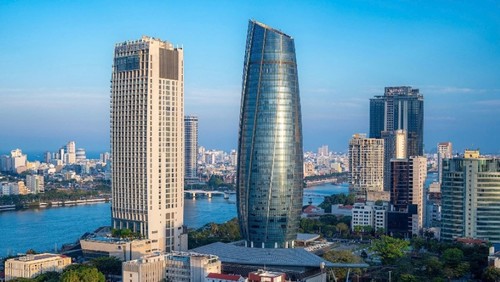 Da Nang has earned numerous international awards, including the ASOCIO Smart City Award in 2019, the Vietnam Smart City Award for five consecutive years from 2020 to 2024, and the Seoul Smart City Prize in 2023. (Photo: VGP) Da Nang has earned numerous international awards, including the ASOCIO Smart City Award in 2019, the Vietnam Smart City Award for five consecutive years from 2020 to 2024, and the Seoul Smart City Prize in 2023. (Photo: VGP) |
Building smart cities in line with Vietnam’s national digital transformation requires standardized data, strong information security, and user-friendly services accessible to all demographics — especially the elderly and vulnerable groups.
But policy alone is not enough. Citizens must also play their part: verifying VNeID at level 2, uploading personal documents to their digital accounts, using the national portal dichvucong.gov.vn for public services, downloading their local smart city app, and using cashless payments wherever possible.
Every tap on a screen lays another brick in building Vietnam’s vision of modern, intelligent, livable cities for the future.