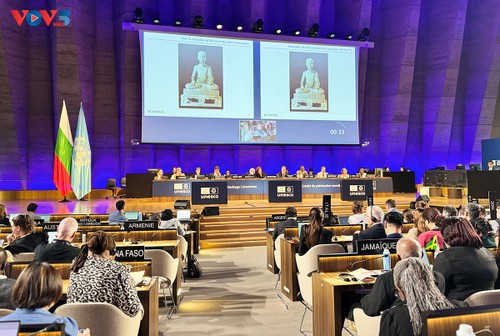
 The UNESCO’s World Heritage Committee reviews the dossier of the Yen Tu - Vinh Nghiem - Con Son - Kiep Bac Complex. (Photo: Anh Tuan) The UNESCO’s World Heritage Committee reviews the dossier of the Yen Tu - Vinh Nghiem - Con Son - Kiep Bac Complex. (Photo: Anh Tuan) |
The complex, located in the provinces of Quang Ninh and Bac Ninh, and Hai Phong city, includes 12 sites with a core area of some 525 hectares and a buffer zone of more than 4,380 hectares.
This is Vietnam’s 9th world heritage and second inter-provincial world heritage, after Ha Long Bay - Cat Ba Archipelago in Quang Ninh province and Hai Phong city.
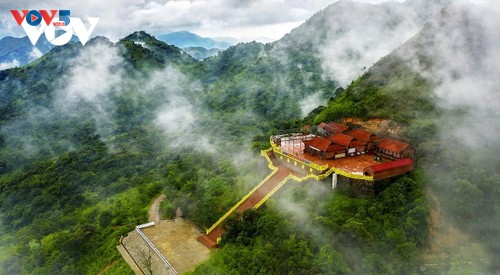 A site at the Yen Tu - Vinh Nghiem - Con Son - Kiep Bac Complex A site at the Yen Tu - Vinh Nghiem - Con Son - Kiep Bac Complex |
The recognition of the complex exemplifies the unique interplay between the state, religion, and the people in shaping Vietnamese national identity, according to the Department of Cultural Heritage.
It embodies a sacred landscape formed by continuous interaction with nature and reflects an ethical system rooted in peace, self-cultivation, tolerance, compassion, and harmony between humanity and nature, the Department said.
The Yen Tu - Vinh Nghiem - Con Son - Kiep Bac Relics and Landscape Complex, with Truc Lam Buddhism as its core, was established in the 13th century during the Tran Dynasty.
Vietnam’s homegrown Truc Lam Buddhism represents a harmonious blend of Mahayana Buddhism principles with Confucian ethics, Taoist cosmology, and indigenous Vietnamese beliefs.
The ideological and cultural values of Truc Lam Buddhism fully align with UNESCO’s fundamental goals of preserving and enriching the shared values of humanity: education, a culture of peace, a spirit of autonomy, a balanced relationship between humans and nature, and respect for the laws of nature.
Through temples, hermitages, pilgrimage routes, stone steles, woodblocks, and well-preserved relics spread across a vast area from Yen Tu to Vinh Nghiem and Con Son – Kiep Bac, this heritage fully reflects the developmental stages of Truc Lam Buddhism.
These sites attract millions of pilgrims and visitors each year.