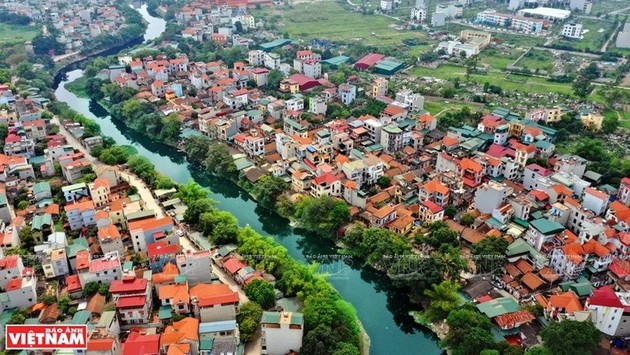
Cu Da village, located about 20 km west of central Hanoi on the Nhue River, reflects the charm of a traditional Northern Vietnamese village. It features remarkably well-preserved ancient architecture. (Photo:Khanh Long/VNP)
|
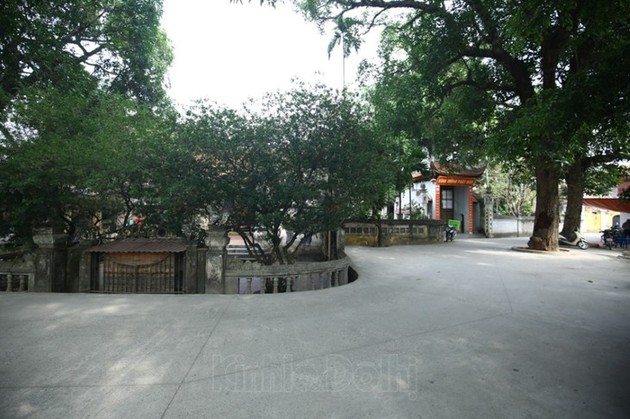
Historical records show that Cu Da village was established four centuries ago by members of the Trinh Lords’ family. (Photo: kinhtedothi.vn)
|
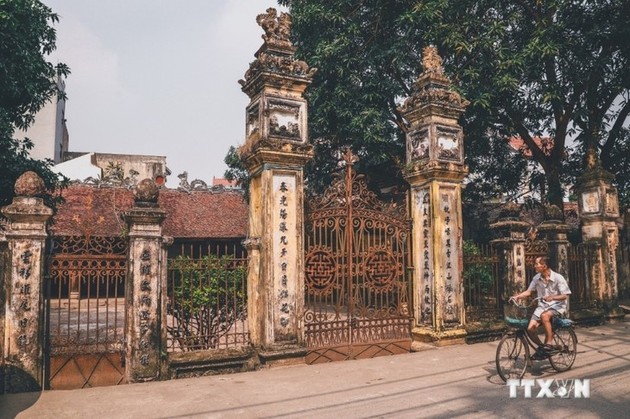
Cu Da Communal House is renowned for its timeless beauty. (Photo: Van Chi/VNA)
|
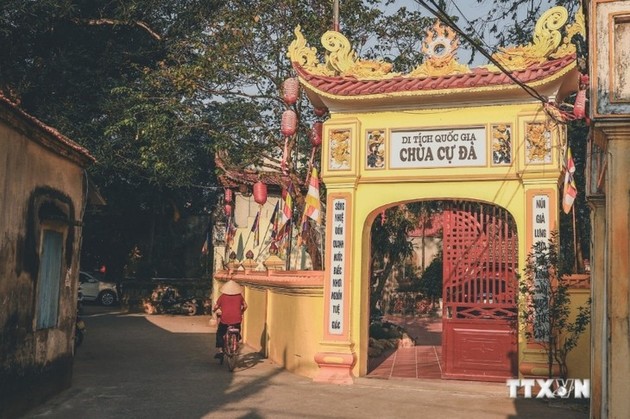
Cu Da Pagoda was recognized as a national historical-cultural monument in 2000 and has undergone several restorations. (Photo: Van Chi/VNA)
|
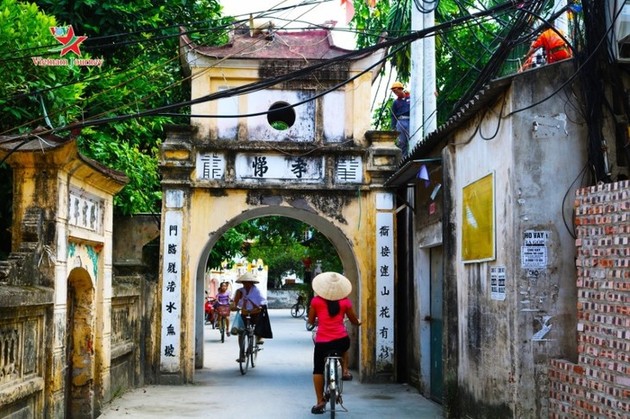
The small village was at its peak of wealth between the 17th and 20th centuries. (Photo:VOV)
|
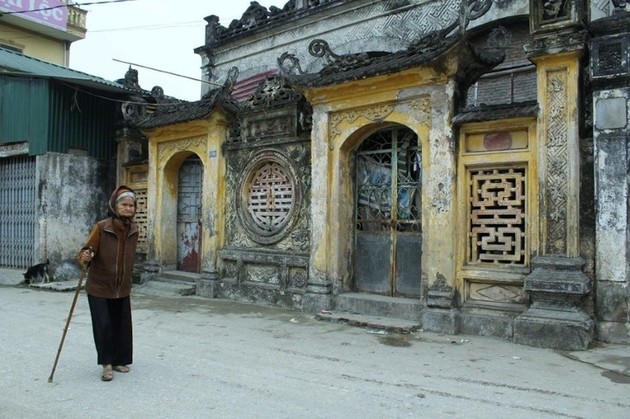
Life in Cu Da village flows along peacefully. (Photo: daidoanket.vn)
|
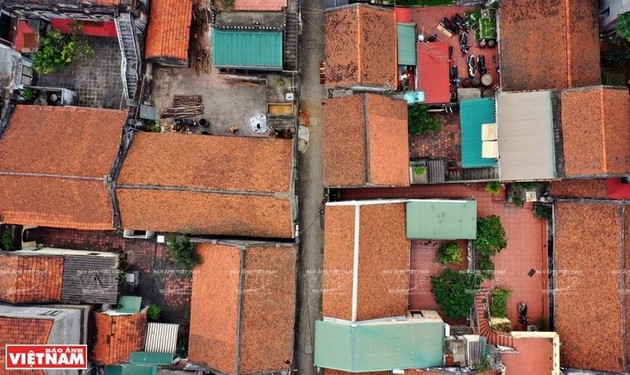
Cu Da Village boasts a unique cultural atmosphere, featuring hundreds of ancient houses. However, only about 50 of them retain ancient Red River Delta architecture. (Photo: Khanh Long/VNP)
|
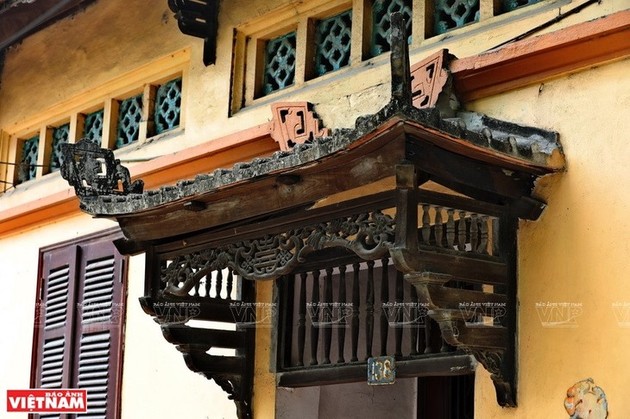
Many Cu Da houses showcase the traditional, rustic charm of Northern villages, blending with the elegance of French architecture. (Photo: Khanh Long/VNP)
|
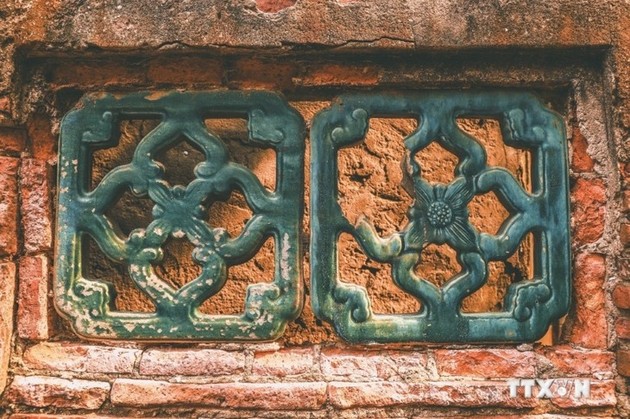
A brick wall with jade green windows and detailed Asian carvings. (Photo: Van Chi/VNA)
|
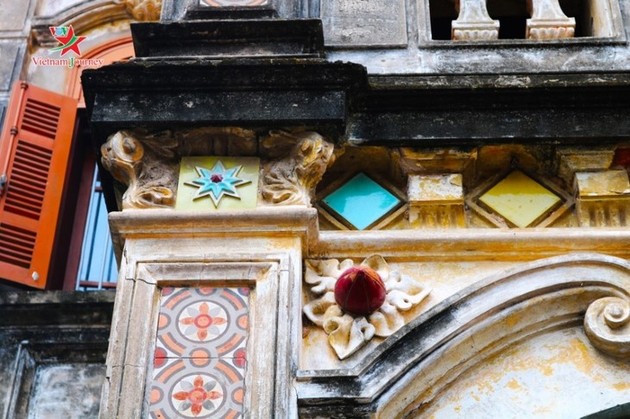
The carved lines of French designs mixed with Vietnamese village motifs exhibit the skilled craftsmanship of Cu Da's ancient artisans. (Photo: VOV)
|
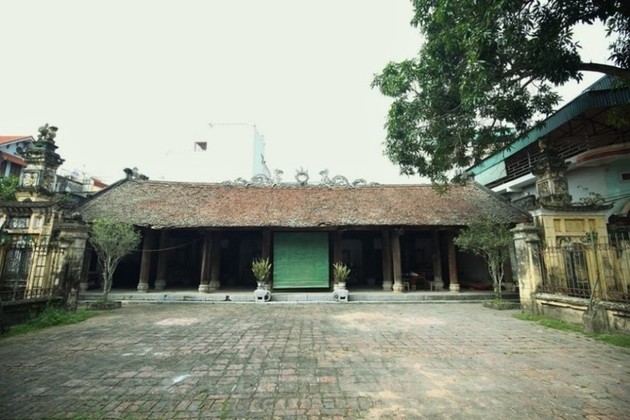
Cu Da houses feature the typical 3-compartment or and 5-compartment design of the Red River Delta. (Photo: kinhtedothi.vn)
|
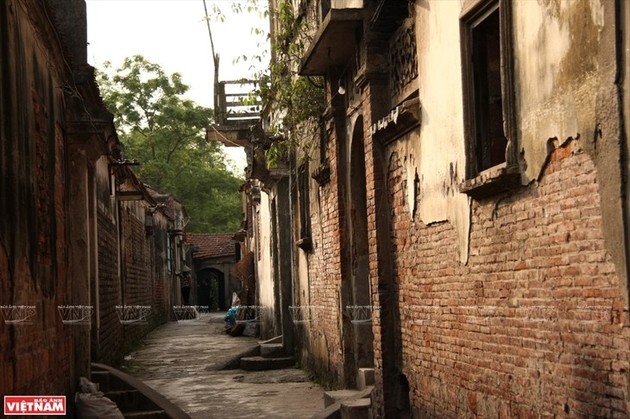
A narrow alley with old, worn walls. (Photo: Phong Thu/VNP)
|
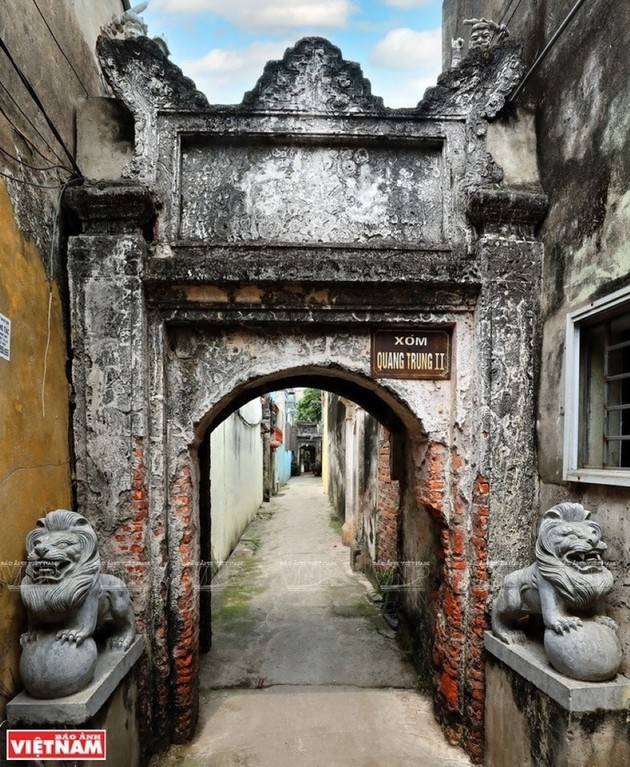
One of the few remaining village gates in Cu Da ancient village. (Photo: Khanh Long/VNP)
|
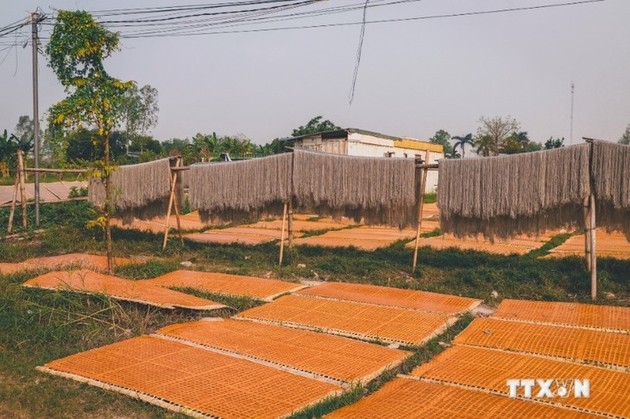
Cu Da village is famous across the country for its delicious vermicelli and soy sauce, produced by nearly 400 local households.
|
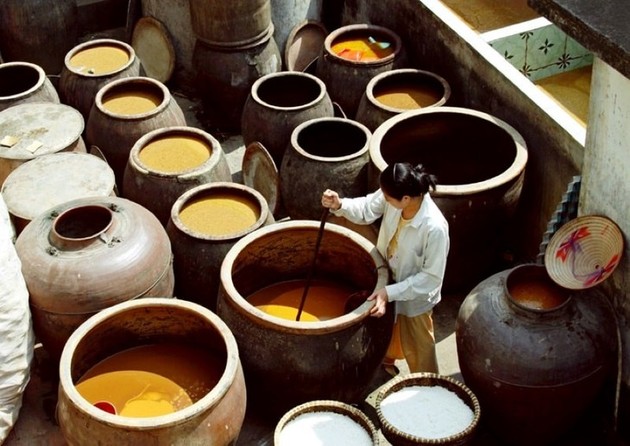
Its traditional soy sauce production follows a family-run model. Currently, only about 4 to 5 households in the village continue this craft. (Photo: Ba Hoat/hanoimoi.vn)
|