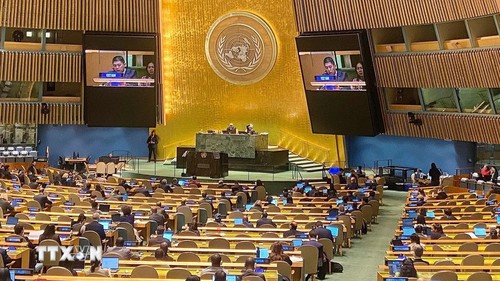
 A Vietnamese representative speaks at the UN General Assembly's meeting on December 24, 2024 to adopt the Hanoi Convention. (photo: VNA) A Vietnamese representative speaks at the UN General Assembly's meeting on December 24, 2024 to adopt the Hanoi Convention. (photo: VNA) |
Themed “Countering Cybercrime – Sharing Responsibility – Securing Our Future,” the signing ceremony of the UN Convention against Cybercrimes will bring together more than 1,000 delegates from 100 countries, technology companies, and international organizations. It shows that protecting cyberspace cannot be the task of a single nation.
The UN’s theme aligns with the message from Vietnamese President Luong Cuong that “cyberspace is a shared asset of humankind and can only be effectively safeguarded through cooperation and responsibility shared among nations.”
Establishing a legal and practical framework
The Hanoi Convention lays out a legal framework with 9 chapters and 71 articles, defining and criminalizing cybercrimes such as unauthorized access, system interference, online fraud, and child exploitation. It stipulates rights to investigate, collect electronic evidence, exchange data internationally, and seek technical assistance.
Major Pham Quang Huy of the Department of Cybersecurity and High-Tech Crime Prevention of the Ministry of Public Security said: “In terms of scope, the Hanoi Convention covers new types of cybercrimes that were not clearly addressed before, including laundering money through virtual assets. On international corporation it clarifies the types of electronic data to be shared, for example, subscriber traffic and data, especially a real-time data and promote a digital processing of a mutual legal assistance.”
The Hanoi Convention will open a new, more comprehensive and equitable chapter of international cooperation in combating cybercrime. Major General Le Xuan Minh, Director of the Department of Cybersecurity and High-Tech Crime Prevention of the Ministry of Public Security, said: “The Hanoi Convention will become the UN’s highest-level legal instrument. After being ratified by countries, it will create a unified legal framework for all to follow. The signing of the Hanoi Convention reflects the awareness, responsibility, and leadership of heads of state in addressing this major global threat.”
Vietnam committed to realizing international commitments
The UN’s decision to sign the Convention in Hanoi recognizes Vietnam’s credibility and responsibility in addressing a non-traditional security challenge that has far-reaching impacts on global peace, stability, and development.
For Vietnam, this event demonstrates its readiness to translate international commitments into concrete actions, from policies and legislation to global cooperation. Vietnam has continued refining its legal system, strengthening enforcement capacity, training cybersecurity personnel, and expanding multilateral partnerships to protect itself and contribute to the international community.
Vietnam’s participation in the Convention and related activities will help it foster a safer cyber environment for digital economic growth and digital transformation.
Deputy Foreign Minister Dang Hoang Giang said: “By taking part in this process and being among the pioneers in the global fight against cybercrime, we will be able to mobilize technical and human resources from other countries in combating cybercrimes. It will ensure a safe, secure, and stable environment for national development. We can also learn the lessons and technologies of advanced nations to better respond to these dangerous crimes.”
The Hanoi Convention will establish a global legal framework against cybercrime and mark an important milestone in Vietnam’s multilateral diplomacy in the 48th year of its UN membership. Vietnam pledges to safeguard its own cyberspace while cooperating and abiding by international standards for worldwide cyberspace safety.