 (Illustrative photo: VTV) (Illustrative photo: VTV) |
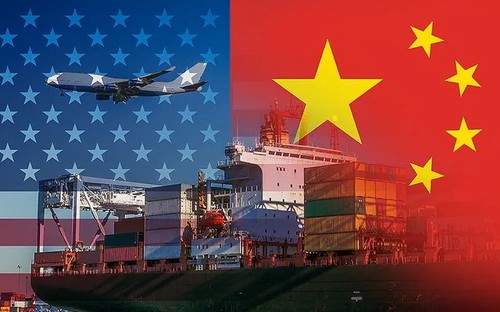
The US-China temporary tariff agreement was reached after negotiations on May 10-11 in Geneva between a US delegation led by Treasury Secretary Scott Bessent and Trade Representative Jamieson Greer and a Chinese delegation led by Vice Premier He Lifeng.
Consensus reached
According to the Joint Statement of the US-China Economic and Trade Meeting, the US will lower tariffs on Chinese goods from 125% to 10%, but its 20% tariff on China’s fentanyl-related goods will remain in effect, bringing the tariffs after reduction to 30%, valid for 90 days.
In return, China will reduce its tariffs of 115% on US goods to 10%. China will also suspend or remove non-tariff measures applied to the US since April 2. Both sides have promised to fully implement these reductions, valid for 90 days, by May 14.
The world’s two largest economies reaching a new trade deal in their first high-level negotiation was surprising, given their hardline stances beforehand. US officials said the most significant reason was that the two don’t want to decouple economically.
US Trade Representative Jamieson Greer said: “The rapid nature that we were able to conduct and conclude these discussions is a testament to mutual understanding and mutual respect between the Chinese and US sides.”
The Joint Statement recognizes the importance of the bilateral economic and trade relationship to the development of both countries and to the global economy and emphasizes the need for a sustainable, long-term, mutually beneficial relationship. China and the US will establish a mechanism for continued economic and trade discussions.
Economies around the world have welcomed the US-China trade deal. EU Economic Commissioner Valdis Dombrovkis said: “Obviously this easing of trade tensions between the US and China is heading in the right direction. It may ease somewhat the trade diversion concerns we had.”
What lies ahead after 90 days?
Global financial markets reacted positively to the 90-day tariff reduction. The S&P 500 index rose 3.3% on Monday. JP Morgan forecast on Monday that China's GDP this year will grow 4.8%, higher than the previous forecast of 4.1%. Economists believe the agreement has somewhat restored investors’ confidence, though the long-term outlook remains unclear. Mr. Dombrovkis said the US’s 30% tariffs on Chinese goods is still very high and could still trigger trade diversions.
Marcus Noland, Executive Vice President and Director of the Peterson Institute for International Economics, said the 90-day period is likely to be extended, as the US and China need more time to negotiate other issues, including those related to fentanyl. Yet, risks for escalation of trade tension remains, said Noland.
“President Trump is talking about putting tariffs on other products, namely pharmaceuticals which we get a lot from China and India. So that if he moved forward with that action that could once again raise tariffs and also could once again scramble relations with China.”
Economist Justin Wolfers of the University of Michigan said that, besides pharmaceuticals, the US is maintaining its 25% tariff on automobiles, steel, and aluminum. Together with the base 10% tariff applied to all countries, including the UK, which just signed a new trade agreement, many goods, not only Chinese goods, imported to the US, will continue to face tariffs of 30% or more.
This will add a significant cost for American businesses and consumers, and companies will hesitate to hire or invest. The most important question now is what the US and China will do when the 90-day period is up.