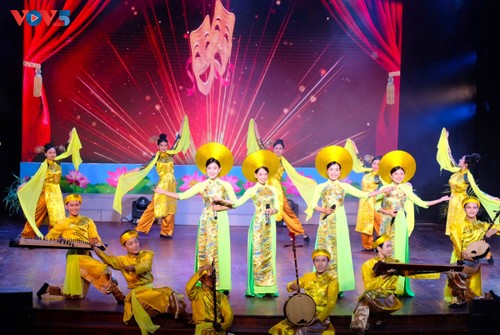
 A performance of Cai Luong (reformed opera) (Photo: Hong Phuong/Mekong Delta-based VOV correspondent) A performance of Cai Luong (reformed opera) (Photo: Hong Phuong/Mekong Delta-based VOV correspondent) |
Hanoi is the melting pot of the finest traditional national values, which can be seen in the city’s extensive cultural heritage system of more than 5,900 historical and cultural relics and 1,800 intangible cultural heritages, including traditional festivals, handicrafts, folk arts, and social practices and beliefs. This is a significant resource for the capital’s sustainable development.
“Hanoi is the cultural center of Vietnam. Cultural values are an asset for national development,” Bui Hoai Son, standing member of the National Assembly’s Committee for Culture and Education, said.
For many years, exploiting heritages for tourism has shaped Hanoi’s cultural ecosystem. While preserving its ancient charm, Hanoi has experimented with models that connect traditional culture with modern technology, such as light festivals, pedestrian streets, culinary festivals, and international exchanges. Hanoi is an example of how a city can use culture to develop its economy, improve the lives of its citizens, and define itself during global integration.
Many other places in Vietnam are also beginning to make culture a component of their sustainable development strategy. In many places, the revival of traditional festivals and ancient crafts, and the development of community tourism have brought economic benefits to residents, while preserving and promoting the local culture.
At the national level, the National Target Program on Cultural Development for the 2025-2035 period aims to promote the cultural life of the people, preserve traditional cultural values, and foster the growth of cultural industries, thereby contributing to socio-economic development.
“The program sets 10 goals, covering all aspects of culture, from building a cultural environment, preserving heritages, developing cultural industries, to promoting international cultural cooperation,” said Mr. Son.
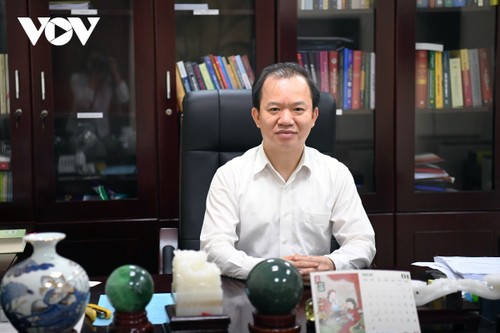 Bui Hoai Son, standing member of the National Assembly’s Committee for Culture and Education (Photo: VOV) Bui Hoai Son, standing member of the National Assembly’s Committee for Culture and Education (Photo: VOV) |
In recent years, cultural industries have emerged as sectors that generate high added value, contribute to economic growth, enhance national competitiveness, and promote the image of Vietnam to the world. The National Target Program calls for cultural industries to contribute 7% of GDP by 2035.
According to experts, with its abundant cultural resources, Vietnam can develop new cinema, music, design, fashion, publishing, video games, and advertising to achieve the twin benefits of cultural development and economic growth. Many Vietnamese cultural products have already reached international markets.
Given the importance of culture, the draft documents to be submitted to the 14th National Party Congress say that developing an advanced Vietnamese culture imbued with national identity and based on national cultural values, family values, and humanistic standards is a key direction in the new period.
Culture is treated as an internal resource, a driving force, and a regulatory system for national development, closely connected to socio-economic, educational, and human progress.