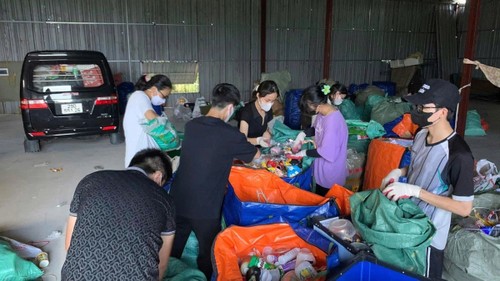
 Volunteers of Tagom group sort waste. (Photo credit: Tagom) Volunteers of Tagom group sort waste. (Photo credit: Tagom) |
In a small room filled with bottles and other containers, Luu Chung Nghia transforms plastic detergent bottles into charming handmade lamps.
Over the years, Nghia has created more than 1,000 toys from materials that would otherwise end up as waste. Each weekend, he collects discarded items, cleans them, and crafts them into everything, from plant pots to toy pigs, elephants, cars, and tanks.
Nghia shares his passion by teaching children how to design toys and posting tutorial videos on social media, encouraging others to creatively repurpose single-use plastics.
“When I was little, I loved making toys from bamboo and leaves. Over time, those materials became harder to find, while plastic bottles and cans became much more common. So, I thought, why not turn those into toys? I hope my work encourages people to think more about environmental protection, extending the life cycle and improving the value of plastic bottles and cans,” Nghia recalled.
Every weekend in Thanh Xuan Bac residential area, the Tagom group, a community of 40 young people, receives recyclables like plastic bottles and bags.
Founded in 2022, Tagom collects waste and advises residents on how to sort and recognize the value of each type of waste. The group collects about two tons of waste each month, which is labeled and sent to certified recycling plants. Some items are upcycled into reusable cloth bags, notebooks, handmade crafts, socks, and other products.
Nguyen Thuy Linh, Tagom’s team leader, told VOV, these activities aim to spread the message that even small actions can lead to bigger, positive changes.
“Reducing just one plastic bag, saying no to a single-use item, or sorting waste at home—all these habits contribute to reducing and recycling waste, and, more broadly, to healing the damage we’ve done to our planet,” said Linh.
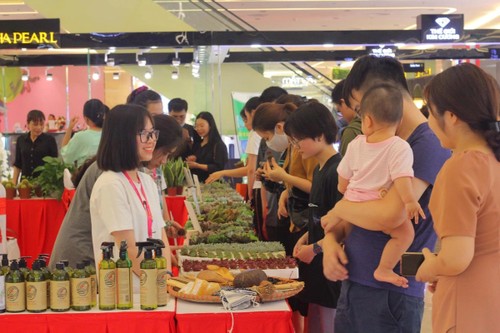 Green Life’s initiative “Trash for Trees” captures the interest of many people. (Photo credit: Green Life) Green Life’s initiative “Trash for Trees” captures the interest of many people. (Photo credit: Green Life) |
Meanwhile, the Green Life group promotes environment-friendly habits in Hanoi and Ho Chi Minh City through creative initiatives called “Trash for Trees” and “Old Items for Lotus.”
Since its founding in late 2018, Green Life has grown to 40 members and 1,000 university student volunteers. The group has collected 600 tons of waste, organized weekly environmental events, and hosted 450 community gatherings with a total of 1 million participants.
These efforts are gradually changing public perceptions of waste.
Green Life is currently working on a new project called “Bringing Trees to the City,” which encourages urban residents to plant more greenery and create healthier living spaces.
The group’s founder Hoang Quy Binh said they handle each type of waste differently. “Paper, for example, goes to recycling plants. Milk cartons are turned into plant pots or coat hangers. Children’s books and teddy bears are donated to schools.”
The core message is simple: let’s all reduce waste, sort it properly, and build a green lifestyle together, Binh said. “When waste is sorted correctly, it becomes a resource—something that can return to serve our daily lives.”
These inspiring initiatives have motivated many young people, including Dang Ha Kien, to take greater responsibility for minimizing waste.
“The first thing that changed me was learning about proper waste sorting. I now know what type of waste goes where and what can be reused. I’ve started spreading this mindset to my family and friends, encouraging them to sort waste with me and maybe even trade recyclables for a plant to decorate their workspace,” said Kien.
A small action can have great meaning. When multiplied, it can create a powerful movement for a greener, cleaner, more beautiful environment. Quietly and diligently, a growing number of young people are spreading a green lifestyle, driven by a sense of responsibility for the world.