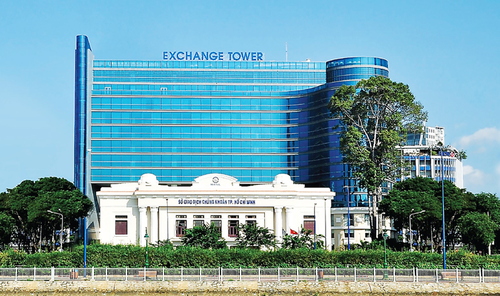
 The Ho Chi Minh City Stock Exchange’s headquarters (Photo: vneconomy.vn) The Ho Chi Minh City Stock Exchange’s headquarters (Photo: vneconomy.vn) |
It has built a modern trading infrastructure, expanded market size, with liquidity leading ASEAN and attracting international capital. Most importantly, Vietnam’s stock market has affirmed its role and greatly contributed to each stage of the national economic development.
At the ceremony marking the 25th anniversary of the Vietnamese stock market held in Ho Chi Minh City on Monday, Deputy Minister of Finance, Nguyen Duc Chi said that a stock market is an important channel for mobilizing medium- and long-term capital for an economy.
“It reflects the health of the economy, its prospects, and the capacity of businesses operating within it. After 25 years, we have made significant achievements to elevate Vietnam’s stock market to a new level,” said Chi.
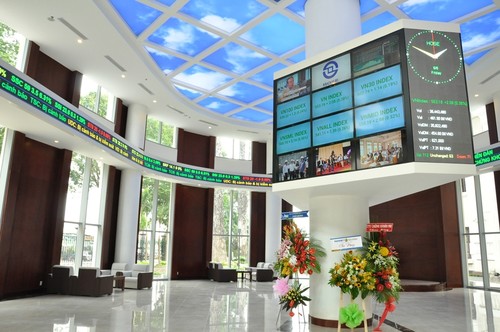 On July 28, 2000, the Ho Chi Minh City Securities Trading Center — the predecessor of the Ho Chi Minh City Stock Exchange (HOSE) —launched its first trading session. (Photo: vneconomy.vn) On July 28, 2000, the Ho Chi Minh City Securities Trading Center — the predecessor of the Ho Chi Minh City Stock Exchange (HOSE) —launched its first trading session. (Photo: vneconomy.vn) |
Vietnam is working to complete a transparent legal framework aligned with international standards and accelerate the digital transformation, modernize technological infrastructure, and upgrade the market classification to attract more foreign capital.
Nguyen Son, Chairman of the Board of Directors of the Vietnam Securities Depository and Clearing Corporation, said, “With the market upgrade, we will be able to attract more foreign capital flows, especially from international institutions and investment funds. These foreign investors often apply specific quotas when allocating capital to a country.”
“For frontier markets, the investment level is relatively low; for emerging markets, it is higher; and for developed markets, the investment level is significantly higher,” Son explained.
On the occasion of its 25th anniversary, a new IT system for the Vietnam stock market developed by the Korea Exchange (KRX) was launched.