Last time, we visited the southern island of Phu Quoc to savor Steamed Mushrooms with Phu Quoc Green Peppercorns. Our next stop is the ancient town of Hoi An in central Vietnam.
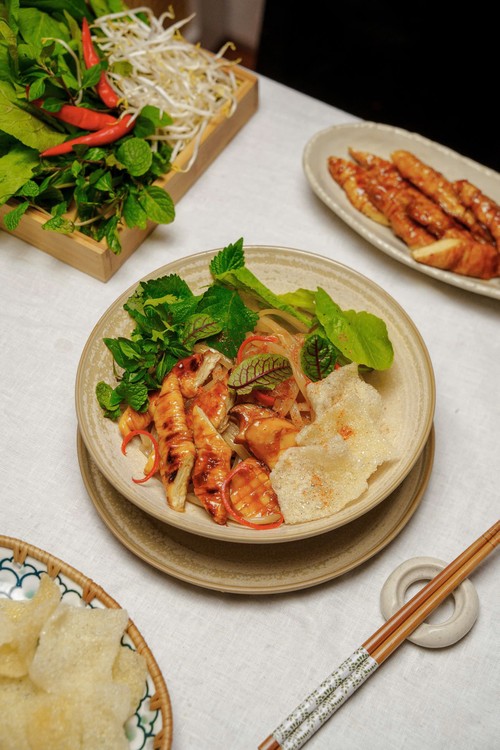 Vegetarian Hoi An noodles (Photo courtesy of Tran Le Thanh Thien) Vegetarian Hoi An noodles (Photo courtesy of Tran Le Thanh Thien) |
Hoi An is famous for its moss-covered rooftops, old yellow walls, and of course, its unforgettable cuisine, including Cao Lau, the noodle dish unique to the UNESCO-recognized heritage site.
Cao Lau is typically served with slices of tender pork, crispy rice crackers, and fresh herbs, topped with a delicious sauce made from pork, soy sauce, garlic, and five-spice powder. In his book “Eat Green and Live Healthily”, chef Tran Le Thanh Thien gives the dish a fresh twist with a vegan version. Let’s take a closer look at the ingredients needed for vegan Cao Lau.
“To make vegan Cao Lau, you need to prepare 350 grams of dried Cao Lau noodles, 100 grams of Cao Lau crackers, 500 grams of vegetable broth, and 200 grams of soybeans. For the vegetarian toppings, we have fresh tofu skin, king oyster mushrooms, honey, soy sauce, vegetarian char siu sauce, five-spice powder, finely chopped shallots, finely chopped leeks, chili powder, and mushroom seasoning,” said chef Thien.
The dish sounds delicious, especially with all those spices and accompaniments like bean sprouts, spearmint, sweet basil, and baby mustard greens. Let’s see how these ingredients are transformed into something delicious and satisfying.
“Wash all the herbs and bean sprouts, and drain them. Soak the dried Cao Lau noodles in warm water for 3-4 hours until they’re soft. Drain them, toss them with one tablespoon of oil, and steam them for 15 minutes until they’re cooked. The next step is to deep-fry the dried Cao Lau crackers until they’re puffed and crispy. Set them aside on paper towels to drain the oil. Finally, blanch the bean sprouts in boiling water for 30 seconds, then drain them,” Thien said.
Now comes the step of preparing the topping for our Cao Lau. In the original version, thin slices of char siu-style pork are used. In the vegetarian version, the pork is replaced with tofu skin, king oyster mushrooms, or other plant-based proteins marinated and cooked to mimic the flavor and texture of pork.
“We start by cutting the tofu skin and king oyster mushrooms into bite-sized pieces. Heat a bit of oil in a pan and pan-sear them until they’re golden brown and slightly crispy on the edges. Next, in a mixing bowl, combine the soy sauce, a bit of honey, the five-spice powder, finely chopped shallots, sliced leeks, mushroom seasoning, and a bit of chili powder. Add the tofu skin and mushrooms to this marinade and mix well so everything is coated. Let it sit for 30 minutes,” said chef Thien.
That five-spice aroma really brings out that char siu flavor, doesn't it? You won’t even miss the meat, I guarantee. And here is the final step:
“After marinating it, return the mixture to the pan and simmer on low heat for about 10 minutes. This allows the flavors to soak in deeply. Once that’s done, remove the tofu and mushrooms and set them aside. Add the vegetable broth to the leftover sauce, bring to a boil, and adjust the seasoning to create a soup sauce.”
We already have steamed and fried Cao Lau, toppings, and sauce. Now comes the plating.
In a bowl, layer the blanched bean sprouts, Cao Lau noodles, and topping, and ladle in a bit of hot broth. Finally, garnish with the crispy Cao Lau crackers, and serve with fresh herbs and soy sauce with sliced chili. This vegan Cao Lau is no less scrumptious than the original version.