 24 types of online fraud are identified common in Vietnam's cyberspace (Photo: AIS) 24 types of online fraud are identified common in Vietnam's cyberspace (Photo: AIS) |
The Ministry of Public Security has identified 24 types of online fraud currently active in Vietnam’s cyberspace.
Among the most insidious are scams involving computer apps that impersonate official services such as the VNeID app, social insurance apps, tax apps, and EVN electricity apps.
The counterfeit apps are often distributed via unofficial websites with unusual domain extensions like “.avk”, and request excessive permissions, particularly accessibility access, that enable the scammers to steal the user’s money or personal data.
Ngo Minh Hieu, widely known as Hieu PC, a leading cybersecurity expert, said that fraudsters impersonating government officials call citizens to request their address details under the guise of syncing with government systems.
“They direct victims to fake websites or apps, luring them into entering personal data, which is then stolen and used for fraudulent purposes,” said Hieu PC.
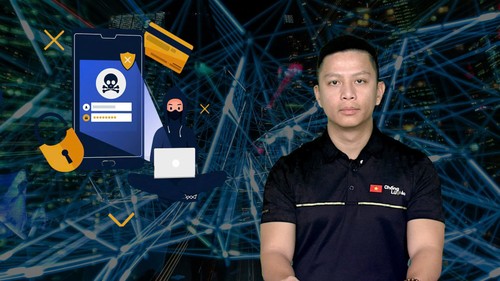 Ngo Minh Hieu is a leading cybersecurity expert in Vietnam (Photo: Minh Hoan) Ngo Minh Hieu is a leading cybersecurity expert in Vietnam (Photo: Minh Hoan) |
Common tactics include scammers masquerading as staff from power companies, tax agencies, social insurance departments, police, or People’s Committees and asking victims to provide sensitive documents such as ID cards or business licenses, or to click on malicious links. Some have even posed as organizers of provincial merger conferences, inviting sponsorships or offering gifts to entice users to download malware-laden apps.
The scams affect a broad spectrum of the population. Younger users may face impersonation by fake law enforcement, extortion, or even staged online kidnappings.
Older adults are often preyed upon through emotional manipulation, such as false claims that their children are involved in legal trouble, exploiting their fears to extort money.
 Lieutenant Colonel Tran Duy Hien, Deputy Director of the National Population Data Center (Photo: Minh Hoan) Lieutenant Colonel Tran Duy Hien, Deputy Director of the National Population Data Center (Photo: Minh Hoan) |
Lieutenant Colonel Tran Duy Hien, Deputy Director of the National Population Data Center, said, "According to Article 26 of the Law on Citizen Identification, the update of administrative boundary data is handled automatically by state agencies. Citizens are not required to visit government offices to request updates. From July 1 this year, people will not need to prove or update their new addresses when carrying out administrative procedures."
Authorities strongly advise citizens not to share updated personal information such as new addresses on social media or online platforms, as this increases the risk of data leaks and security breaches.
In case of suspicious contacts or requests, citizens should promptly report to the relevant authorities, said Lieutenant Colonel Hien.
Echoing Mr. Hien, Hieu PC stressed the need to stay vigilant, "In case of suspicion, the best approach is to visit the office or the headquarters of the unit to handle administrative tasks.”
“Whenever you receive a request for information or a money transfer, take a few seconds to pause and verify it through Google, official news sources, or local authorities.”
“Never install any apps from outside official app stores, and be wary of any app asking for elevated access. Don’t publicly share images of your VNeID, ID card, or QR codes on social networks," according to Hieu PC.
He said slowing down to verify information, avoiding unsolicited calls or messages via phone, Zalo, or FaceTime, and never installing apps from untrusted sources are key defenses against scams.
Hieu also called on businesses to comply strictly with the Law on Personal Data Protection, prioritizing the safeguarding of customer and user data on digital platforms.
"Businesses must regularly conduct cybersecurity testing to ensure their systems can withstand hacking attempts and monitor their employees to ensure that they’re not engaging in illicit data trading,” said Hieu, adding, “Ethical compliance and close observation of employee activities on work devices is essential to prevent information leaks. A breach could lead to legal penalties, PR crises, or even bankruptcy."
Given the rise in cyberattacks and data breaches in Vietnam, companies must increase their security posture and internal controls to avoid becoming vectors for fraud.
Amid ongoing administrative reforms and digital transformation of public services, individuals and businesses must increase their awareness and use caution to avoid becoming a victim of an online scam.
Following official guidance, verifying information through trusted channels, and protecting personal data are crucial steps to guard against fraud during this critical period of change.