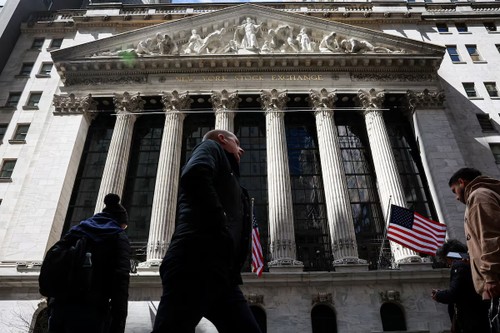
 People walk outside the New York Stock Exchange (NYSE) in New York City, US, April 8, 2025. (REUTERS/Brendan McDermid/ File Photo) People walk outside the New York Stock Exchange (NYSE) in New York City, US, April 8, 2025. (REUTERS/Brendan McDermid/ File Photo) |
1. New York
New York (US) is the world’s largest financial center, home to Wall Street, the NYSE, and Nasdaq. The city hosts leading investment banks such as Goldman Sachs and Morgan Stanley, along with massive asset-management firms overseeing trillions of dollars. Its finance and insurance sector contributes about 8% of the US’s GDP, making it one of the country’s most powerful economic engines. The sector employs 330,000 people in New York and almost 9 million people in the US. New York’s influence comes from its scale: a global hub for capital markets, investment banking, asset management, and fintech.
2. London
London (UK) is the world’s largest foreign-exchange trading center, handling more than 40% of global FX transactions. The city also leads in global insurance, thanks largely to the historic Lloyd’s market, and has strong capabilities in green finance and asset management. The financial sector contributes over 12% of the UK’s GDP, more than any other major industry, and remains the country’s largest source of services exports. London itself hosts 400,000-500,000 finance workers and supports 2.5 million jobs nationwide when counting legal, accounting, and fintech roles.
3. Hong Kong
Hong Kong (China) is Asia’s most open capital market and a major gateway to mainland China. 2022 data showed that financial services contributed around 23% of Hong Kong’s GDP and employed 270,000 people (7% of all jobs). Hong Kong specializes in stock listings, wealth management, and offshore RMB business.
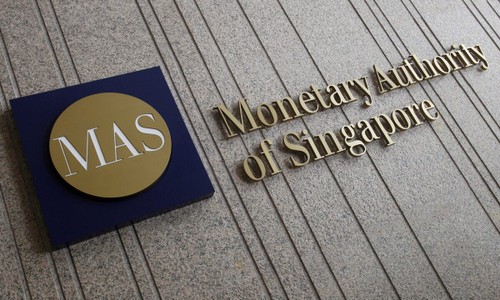 The logo of the Monetary Authority of Singapore (MAS) is pictured at its building in Singapore in this February 21, 2013 file photo. (REUTERS/Edgar Su/File Photo) The logo of the Monetary Authority of Singapore (MAS) is pictured at its building in Singapore in this February 21, 2013 file photo. (REUTERS/Edgar Su/File Photo) |
4. Singapore
Singapore is Southeast Asia’s financial powerhouse and a global hub for wealth management. It is known for its transparency, political stability, and reliable regulatory governance. The city leads in fintech innovation, digital banking, regulatory technology, and cybersecurity. Its strengths also include trade finance, maritime finance, and global risk-management services. Finance accounts for about 14% of Singapore’s GDP and employs 7% of the workforce, with high concentrations in banking, insurance, compliance, and fintech.
5. San Francisco
San Francisco (US)’s financial power comes from its close ties to Silicon Valley, the world’s most influential technology ecosystem. It hosts the highest concentration of venture-capital firms and investors funding cutting-edge startups. The region drives advances in blockchain, cryptocurrency, digital payments, and AI-powered financial services. Venture capital and fintech power a massive innovation economy that contributes hundreds of billions of dollars to the US’s GDP each year.
6. Chicago
Chicago (US) is the global capital of derivatives trading, home to CME Group and Cboe. The city specializes in futures, options, and sophisticated risk-hedging tools used by the global energy, agriculture, and financial industries. Its financial services sector contributes around 8% of Illinois state’s GDP and anchors the Midwest’s economy. Finance and insurance employ some 330,000 people, with thousands more in risk management, clearing, and legal services.
7. Los Angeles
Los Angeles is a major US center for asset management, private equity, and entertainment finance. The sector contributes over 60 billion USD annually to the regional economy. LA’s broader job impact is amplified through Hollywood, which relies heavily on financial services for film financing, insurance, and investment structures. LA’s niche strength: the intersection of finance, media, and real estate.
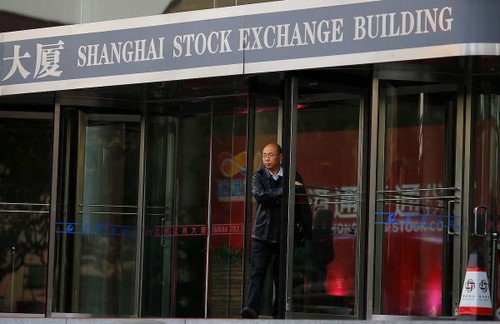 A man walks out of the Shanghai Stock Exchange building at the Pudong financial district in Shanghai November 17, 2014. (REUTERS/Carlos Barria) A man walks out of the Shanghai Stock Exchange building at the Pudong financial district in Shanghai November 17, 2014. (REUTERS/Carlos Barria) |
8. Shanghai
Shanghai is mainland China’s financial capital and home to major stock exchanges, the STAR market, and state-owned banking giants. The city is emerging as a leader in green bonds and sustainable-infrastructure financing. Shanghai focuses on banking, securities, futures, fintech, and global RMB internationalization.
9. Shenzhen
Shenzhen is China’s innovation-finance hub, powered by tech giants like Tencent and Ping An. Finance employs hundreds of thousands of workers, with strong growth in digital payments, venture capital, insurtech, and blockchain. Shenzhen blends Silicon Valley-style innovation with full-scale banking and capital markets.
10. Seoul
Seoul is the Republic of Korea’s financial and innovation center, home to major banks, insurers, and the Korea Exchange. Its finance and insurance sectors generate strong demand for analysts, risk managers, fintech engineers, and asset managers. The city is especially strong in fixed-income products, payments technology, and digital banking.