 Hanoi among Asia’s seven most beautiful autumn destinations (Photo: VNA) Hanoi among Asia’s seven most beautiful autumn destinations (Photo: VNA) |
B: We begin this week’s Letter Box with a heartwarming message from Mr. Amir Jameel, President of the VOV Online Visitors Club in Sahiwal, Pakistan. He wrote: “As a concerned listener of the Voice of Vietnam English Service and a fellow human being, I wish to extend my deepest sympathies to the people of Vietnam in the wake of the devastating floods caused by Typhoon Matmo — the worst in 40 years.”
A: Thank you, Mr. Jameel, for your kind words of solidarity. Your compassion means a lot to us. The storm indeed caused severe flooding in several provinces, but relief efforts have been mobilized quickly, and communities are gradually recovering.
B: Jacques Augustin from France sent condolences for the victims of the recent storm and asked whether Vietnam receives financial support from ASEAN or other international organizations in such situations.
B: Vietnam is calling for continued partnership and assistance from international partners as the country is grappling with floodwaters in many areas rising above historic levels, posing a high risk of prolonged inundation and landslides.
A: In 2024, partners contributed approximately 25 million USD and thousands of tons of relief goods, helping communities in Vietnam recover from severe disasters.
B: In 2025, natural disasters in Vietnam have continued to grow more complex and extreme. Despite the country’s extensive efforts in prevention and response, many disasters have struck with an intensity exceeding the response capacity of both local communities and existing prevention systems.
A: UN Resident Coordinator in Vietnam Pauline Tamesis expressed deep sympathy for the loss of lives and property caused by the recent disasters and reaffirmed the UN’s commitment to stand with Vietnam not only in emergency response but also in long-term resilience programs.
B: A shipment of emergency aid from the Japan International Cooperation Agency (JICA) arrived at Noi Bai International Airport in Hanoi on Monday to support flood-hit people in northern Bac Ninh province.
A: The aid includes 40 water filtration devices, 5,100 sets of blankets, 1,000 plastic water tanks and 50 multi-purpose plastic sheets.
B: On Tuesday, Australian Foreign Minister Penny Wong said Australia is providing up to 3 million AUD in humanitarian assistance to Vietnam following Typhoons Bualoi and Matmo. Australia’s support will include emergency relief supplies such as kitchen kits, hygiene kits and shelter tool kits.
A: In addition, Vietnam is expected to receive relief goods from Russia, the ASEAN Coordinating Centre for Humanitarian Assistance (AHA Centre) and many other international organizations. The relief goods will be distributed to localities wreaked havoc by recent storms and floods, especially the northern provinces like Lang Son, Cao Bang, Thai Nguyen, Tuyen Quang and Bac Ninh.
B: We truly appreciate the timely assistance and heartfelt sympathy from the international community. In times of hardship, such solidarity reminds us that compassion knows no borders.
A: To all our listeners who have expressed concern, sent messages of support, or simply kept Vietnam in your thoughts and prayers — thank you. Your kindness and friendship mean so much to us and to the people of Vietnam.
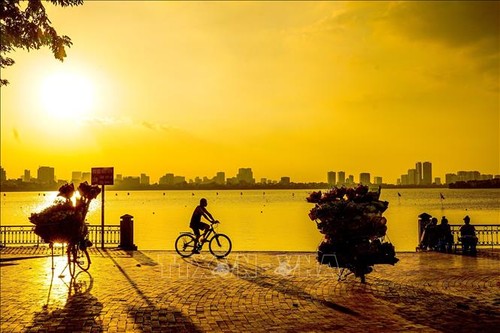 Autumn in Hanoi's West Lake (Photo: VNA) Autumn in Hanoi's West Lake (Photo: VNA) |
B: We also heard from our long-time listener Esaba Ela in Narayanganj, Bangladesh, who wrote: “I have been listening to VOV for 12 years because all your programs are exclusive. On October 13, I listened to Colorful Vietnam – Vietnam’s 54 Ethnic Groups, especially the story about the Mnong people and their Prak Gong.”
A: Thank you, Esaba! We’re happy you enjoyed that feature. Your reception report on 7220 kHz with SINPO 33333 has been confirmed, and your QSL card and sticker are on the way!
B: Another listener from Bangladesh, Omar Faruk, also sent us a detailed reception report, saying: “Your programs are very informative — about culture, science, and history. Among all international broadcasters, Voice of Vietnam is the best!”
A: Thank you, Omar! We’re touched by your kind words. And what a lovely story about your 38-year pen friendship with fellow radio listener Abdul Mannan! Radio truly connects hearts across borders. We’ll also try to send you a small souvenir soon.
B: From Lake George, New York, listener Raymond DelValle shared that he received our English broadcast on 11885 kHz with a Belka DX radio — signal strength S5, SINPO 333. Meanwhile, Andrew Ross from Devon, England, wrote: “A very strong signal, but with some propagation noise.”
A: Thanks for your detailed feedback, Andrew. We appreciate your technical reports, which help us improve our transmission quality.
B: Many of you have shared not only reception reports but also thoughtful questions and reflections. From Zaragoza, Spain, Juan Carlos Gil wrote: “Your programs are always interesting, especially those about rural life in Vietnam. I love the way you highlight people’s progress and initiatives, such as helping poor families with cattle and agricultural training.”
A: Thank you, Juan Carlos! Our aim is to bring listeners closer to the everyday life of Vietnamese people - their resilience, creativity, and warmth.
B: From Germany, Lutz Winkler asked about Vietnam’s insurance system — whether there are mandatory types of insurance and if private insurance is common.
A: In Vietnam, health insurance is compulsory for most citizens, while social and unemployment insurance are required for workers under contract. Private insurance is also available, especially for higher coverage.
B: Karsten Schönsee, also from Germany, was curious about Vietnam’s coffee culture. Well, Karsten, coffee is almost a national treasure here! From Hanoi’s strong egg coffee to HCM City’s iced milk coffee, it’s part of everyday social life — from street corners to modern cafés.
A: Salt coffee might be the most trending drink at the moment. An article on CNN wrote that salt coffee is just one of several distinctive Vietnamese coffee drinks that might raise a few eyebrows among those who’ve yet to sample them.
B: A small, no-frills café in Vietnam’s historical city of Hue is widely credited with inventing this now-popular beverage, which is made by adding sweetened condensed milk to a base of Vietnamese coffee, the article said. The mixture is topped with salted cream and it’s served hot or iced.
A: “This combination of condensed milk, salt and black coffee creates a creamy mixture that softens the bitterness of the coffee and balances the sweetness of the condensed milk,” CNN said, citing the cafe’s owners.
B: Even Starbucks’ branches in Vietnam have joined the salt coffee wave, launching their own version of salt coffee.
A: Vietnam, which primarily grows robusta beans, is the world’s second-largest exporter of coffee after Brazil. That salt coffee has become a common option on menus across Vietnam nowadays shouldn’t come as much of a surprise, CNN said.
B: We hope that you would come to Vietnam one day and explore the Vietnamese coffee culture by yourself. See you then.
A: And from Pakistan, Muhammad Aqeel Bashir asked how Vietnam ensures fair access to artificial intelligence (AI) from cities to rural areas. That’s a great question!
B: The Vietnamese government has launched programs to promote digital literacy and expand AI applications in agriculture, education, and healthcare — to ensure no region is left behind.
A: Thank you all for your thoughtful letters, reception reports, and warm words for Vietnam and for VOVWorld. Your messages inspire us every day to keep improving and to bring you stories that matter from Vietnam to the world.
B: Please keep your letters and emails coming to englishsection@vov.vn, or find us on Facebook at VOV5 English Service. Until next week, NQ and PK saying goodbye from Hanoi.