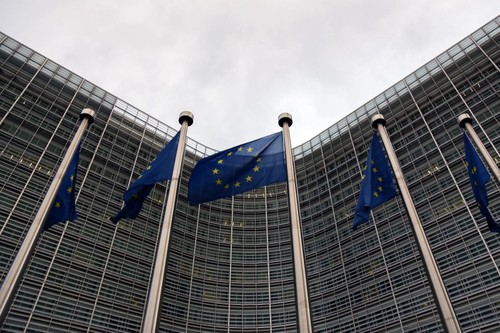
 (Photo: XNA/VNA) (Photo: XNA/VNA) |
The EU and MERCOSUR, a South American trade bloc, began negotiations on a free trade agreement in 2000, but disagreements between EU countries froze the talks until both sides finalized the draft text at the end of last year.
A strategic agreement
The signing of the pact concludes the EU’s longest negotiations with a trade partner. Once it’s ratified by all 27 EU member states and the MERCOSUR countries – Brazil, Argentina, Paraguay, Uruguay, and Bolivia – the agreement will create one of the world’s largest free trade areas, with approximately 700 million consumers.
For MERCOSUR countries, agriculture will be the biggest beneficiary, as agricultural staples like meat, sugar, honey, and soybeans will be exported to Europe from Brazil and Argentina at lower tariffs with fewer barriers. EC President Ursula von der Leyen said Tuesday that EU businesses and the EU agri-food sector will immediately benefit from reduced tariffs and lower market entry costs in South America.
MERCOSUR countries will gradually eliminate import tariffs on 91% of EU goods, including cars, chemicals, wine, and chocolate, which are currently subject to a 35% tariff. The EC estimates that the deal will save European exporters more than 4 billion euros in tariffs each year, and boost the EU’s annual exports to MERCOSUR as much as 39%, equivalent to 49 billion euros.
The agreement gives the EU a significant advantage over competitors, as it uses trade diversification to address risks in its economic relations with the US and China.
On Tuesday, the EC also submitted a proposal to the European Council to adopt the modernized EU-Mexico Global Agreement (MGA).
“It's a very important moment not just for the European Union's trade policy, but for our broader economic future. The EU-Mercosur Partnership Agreement alongside the modernized EU-Mexico Global Agreement are not just trade agreements, they are strategic instruments that will help shape Europe's role in the global economy for the decades to come,” European Trade Commissioner Maros Sefcovic said.
If the MGA is adopted, the EU will gain major benefits from Mexico’s market of over 130 million people, the second-largest economy in Latin America and the EU’s second-largest trading partner in the region after Brazil. Trade of goods and services between the two sides is worth 81 billion USD annually, and generates 630,000 jobs per year in Europe.
Agricultural safeguard mechanism
Under EU rules, a free trade agreement must secure majority approval in the European Parliament (EP) and be ratified by 15 out of 27 member states representing at least 65% of the EU population, which is considered a major challenge.
Most EU countries support the agreement, including Germany, the EU’s largest economy, and Spain, which enjoys close economic and political ties with South America. Those countries say the EU-MERCOSUR deal will significantly offset Europe’s economic losses caused by US tariffs and reduce the EU’s dependence on China, particularly in minerals and essential materials.
Two other major EU economies, France and Poland, strongly oppose the deal, saying that cheap agricultural products with lower environmental standards from MERCOSUR countries will harm European agriculture. France and Poland have branded it “unacceptable” and threatened to block it unless agricultural provisions are changed, although Paris’s stance has recently shown signs of softening.
“We have agreed with France that if it does not want to join us in forming a minority group to block the agreement, at least it should work with us to prepare a protective mechanism. This means that if the deal enters into force and any negative signs appear in the agricultural market, such as beef, then the European Commission must immediately apply protective policies, such as reinstating import tariffs,” Polish Prime Minister Donald Tusk said on Tuesday.
To ease farmers concerns, the EC plans to add legal wording to the MERCOSUR agreement to protect “sensitive European products.” It pledges to intervene if imports negatively affect certain sectors such as beef, poultry, sugar, and ethanol. In addition to opposition from some governments, the EU will also have to address the backlash from many European agricultural unions, which view the agreement as a direct threat to their members.